
On Home Automation, Building Automation, Urban Automation, and LEED
9 May 2016 by Carlos Dobobuto
Professional Development for Building Design and Construction
When we first knocked on the doors of construction firms in Venezuela to offer our services, we quickly found that most professionals responsible for design and project management had little clarity on what home automation (domótica), building automation (inmótica), and urban automation (urbótica) actually meant — let alone LEED energy and environmental certification.
That gap pushed us to take training seriously. We started running targeted courses, and as our reputation grew through those sessions, the invitations to congresses, symposiums, and industry events followed.
The experience we've built in a relatively short time leads us to one clear conclusion: there is an enormous appetite for knowledge in our country, and these kinds of events are a genuinely valuable channel for updating or building the skills of practicing professionals.
At the same time, they help fill the gaps left by university curricula that are overdue for renewal — renewal that requires both national government and private institutions to commit budgets to faculty development and to laboratories equipped for the realities of modern construction practice.
Educating vs. Advertising
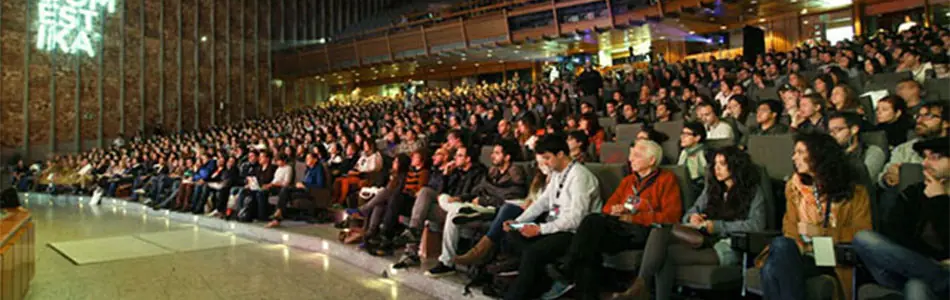
 A speaker sharing knowledge at a construction industry congress.
At most events, you encounter two distinct types of speakers: one who focuses almost entirely on promoting their brand and using the slot to showcase what their company does, and one who is genuinely trying to develop the audience's knowledge.
Our view is that a good presentation should contain both — but in the right proportion. The majority of the time should go toward educating, guiding the audience, and even acknowledging relevant technologies or products offered by competitors. The commercial message belongs at the end, not at the center. The surest way to hold an audience's attention is to give them something useful.
Unfortunately, it's common to see speakers who spend the entire session talking about their brand and product portfolio, prioritizing commercial visibility above everything else.
A reflection for any professional who steps behind a podium: orient your talk toward the audience's learning. Even if the ultimate goal of attending a congress is to raise your company's profile, a presentation built entirely around a sales pitch leaves nothing of lasting value. Knowledge is the real differentiator — your brand sells itself when the quality of what you share speaks for itself.
Through this process of participating in various conferences, we've had the privilege of encountering organizations doing genuinely important work. Among them:
- Instituto de Desarrollo Experimental de la Construcción (IDEC) — the country's first university-based research and development institute dedicated to introducing technological innovation in architecture and construction. Led by Prof. Geovanni Siem. More at http://idec.fau.ucv.ve/wordpress/.
- Escuela de Constructores Populares de la UCV — trains technicians for the construction industry while creating opportunities for underserved communities. Led by Prof. Gustavo Izaguirre. More on YouTube and UCV Noticias.
- Asociación Venezolana de Ejecutivos de Seguridad (AVES) — brings together a significant number of electronic security companies and works to promote market standardization. Led by Valdemar López. More at seguridadonline.com.
- NOVOS i + e — a Universidad Metropolitana initiative supporting entrepreneurs who have a business idea and want to turn it into reality. Led by Dr. José Roberto Bello. More at unimet.edu.ve.
- Fundación Ciudades Digitales — a non-profit focused on developing information and communication technologies. Led by Engineer César David Chirino. More at Twitter/ciudaddigitalve.
- Emprende program, run by IESA. More at emprende.edu.ve.
- Caracas Startup Weekend — the country's leading entrepreneurship event, bringing together a working team over 54 hours (one weekend) to develop a business concept ready for incubation and acceleration. Guided by an experienced mentor group. More at caracas.startupweekend.org and Twitter/CaracasSW.
- OTIP C.A. — a firm with extensive experience in structural design and construction. Led by Engineer José Peña. More via this link.
These organizations represent only a fraction of those contributing daily to professional development — not just in construction, but across a wide range of fields — always with an eye toward encouraging innovation and entrepreneurship.
Participant Experience Is Everything
 The overall attendee experience defines the quality of any congress or professional gathering.
The quality of a congress or professional event is measured not only by the caliber of its presentations, but by the complete experience an attendee has — from the first moment they express interest all the way through to the follow-up after the event ends.
Organizers need to care about every detail: before, during, and after. The supporting materials provided at the start of the event must be up to standard, and breaks should be structured to encourage networking — actively creating conditions for people from different professional backgrounds to connect.
One practice we've found particularly effective is the facilitated working group: participants are assigned to small tables and asked to take a position on a specific topic, which then feeds into a broader public discussion. It shifts the dynamic from passive listening to active engagement.
In-Person or Online
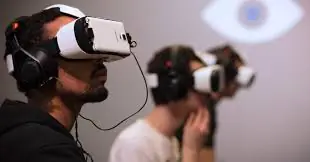 Hybrid events extend the reach of knowledge beyond geographic boundaries.
Technology has reshaped virtually every aspect of our lives, and professional development is no exception. We need to expand the range of participation options — events too often take place in cities or countries that many interested professionals simply cannot travel to.
The in-person experience should be mirrored online in real time, with every presentation recorded and made available afterward. That's the straightforward way to extend the reach of what's being taught.
Virtual reality is poised to be one of the most significant shifts in event delivery of any kind. It allows someone anywhere in the world to experience an event as though they were physically present — from student training sessions to academic conferences to live performances and exhibitions.
We close with a call for creativity and openness in how knowledge is shared. At INNOTICA, we welcome any invitation where the primary goal is training, knowledge-sharing, and motivating students and professionals — in Venezuela and across the region. Keep organizing, keep gathering, keep pushing the knowledge forward.