
Harmonics: The Silent Problem of Automation and Control
15 November 2016 by Francismar Suárez
Today's energy priorities point in two directions: using energy more rationally (energy efficiency) and integrating renewable sources — all in pursuit of truly efficient electrical installations, whether industrial, residential, or commercial.
From a technical standpoint, energy efficiency relies on improving productivity and optimizing consumption through control and automation across an installation's entire lifecycle.
There's a catch, though. The rapid adoption of electronic control and automation technologies has intensified a longstanding electrical anomaly: harmonic distortion.
Understanding Harmonics
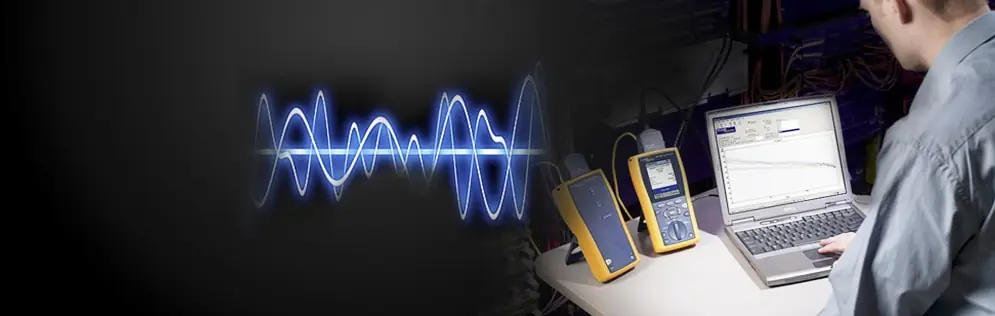 Sinusoidal waveform distortion caused by harmonic generation.
Every control and automation device receives a sinusoidal wave as its supply signal. The output signal — the one actually used to drive control actions — is typically distorted, taking a square or otherwise non-sinusoidal shape.
That distortion produces harmonic currents that superimpose onto the fundamental sinusoidal wave (60 Hz), deforming it and increasing the nominal current.
The consequences vary by device type, but the most common problems include:
- Interference with the operation of electronic measurement and protection devices.
- Overheating in electrical equipment (motors, transformers, etc.).
- Currents accumulating on the neutral conductor, creating electrical hazards for users and generating potential differences between neutral and ground.
- Higher conductor temperatures and accelerated insulation degradation.
Nonlinear loads — the devices that actually generate harmonics — differ from installation to installation, which means each facility presents its own harmonic profile.
Control, Automation, and Harmonics
 Control and automation devices are common sources of total harmonic distortion (THD).
Control and automation have transformed how people live and work inside buildings, and they've driven meaningful energy savings. But that same growth has caused total harmonic distortion (THD) to rise sharply across electrical networks.
The control devices in use today are remarkably varied and appear in virtually every type of installation. At the simpler end: lighting controllers that adjust artificial illumination based on detected daylight levels, occupancy-triggered luminaires with electronic ballasts in common areas, or temperature controllers managing HVAC units — air conditioners, fan coils, chillers, and similar equipment.
At the other end of the spectrum, full building automation and control networks integrate multiple systems across an entire industrial, commercial, or residential facility. All of these solutions generate harmonics to some degree, regardless of the installation type.
Lighting controllers and air conditioning units alone can produce current THD levels of up to 58% — well above the limits set by IEEE Standard 519.
Harmonics by Installation Type
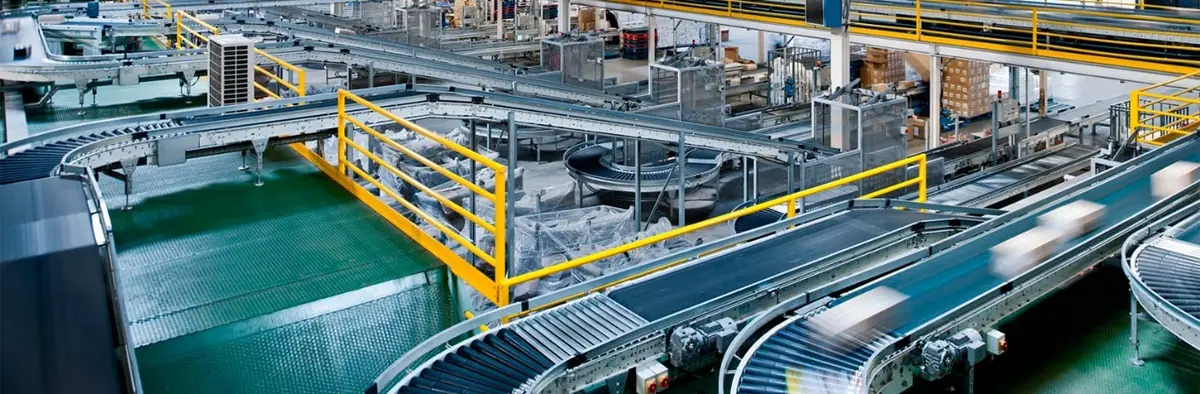 The nonlinear load profile — and thus the harmonic signature — varies significantly by installation type.
Each type of installation has its own automation and control profile, which in turn defines its most common nonlinear harmonic sources.
In industrial installations, harmonics come primarily from power electronics: variable frequency drives, electric arc furnaces, variable speed drives, electronic ballast luminaires, welding equipment, motors, computers, automated machinery (conveyor belts, printers, air conditioners, etc.), and ferromagnetic devices, among others.
In commercial and office installations, the main sources are computers, electronic ballasts, telecommunications and security electronics, microwave ovens, automated alarm systems, and any device managing comfort — HVAC and lighting control in particular.
Building Truly Efficient Installations
The list of harmonic-generating devices is long, and there's no realistic path to eliminating them — especially as smart technology continues to expand into every corner of our built environment.
So what can be done? The answer starts with designing installations that are genuinely efficient and comprehensive: ones that don't just reduce electricity consumption but also incorporate equipment — such as harmonic filters — that actively counteracts the distortion introduced by control and automation devices.
Alongside that technical response, there's a policy dimension that can't be ignored. Strong national standards and enforcement mechanisms are needed to hold facility owners and operators accountable for mitigating harmonics in their installations.