
IoT and the Evolution of Urban Management
26 May 2021 by Nixon Cedeño
Urban populations are growing fast, and that growth is exactly what makes the shift toward smart cities — and technologies like the Internet of Things (IoT) — so pressing.
So what is IoT? According to Red Hat [1], the Internet of Things refers to the constant expansion of internet-connected physical objects — including many you might never expect. The category spans everyday household items like refrigerators and light bulbs, commercial assets like shipping labels and medical devices, and wearables, smart devices, and entire smart cities that simply couldn't exist without IoT infrastructure.
More precisely, IoT describes systems of physical devices that send and receive data over wireless networks without human intervention. What makes it possible is the embedding of simple computing components and sensors into virtually any object.
A smart thermostat is a straightforward example. It reads the location data from your connected car as you drive home and adjusts the indoor temperature before you arrive — no manual input required, and a more comfortable result than if you'd tried to schedule it yourself.
This expansion has pushed progress on two fronts simultaneously: hardware and software. We now have vast ecosystems of devices and sensors that stay connected regardless of physical location. The connections are effectively unlimited, enabling the collection of enormous datasets and the delivery of real-time intelligence that makes any system meaningfully more efficient.
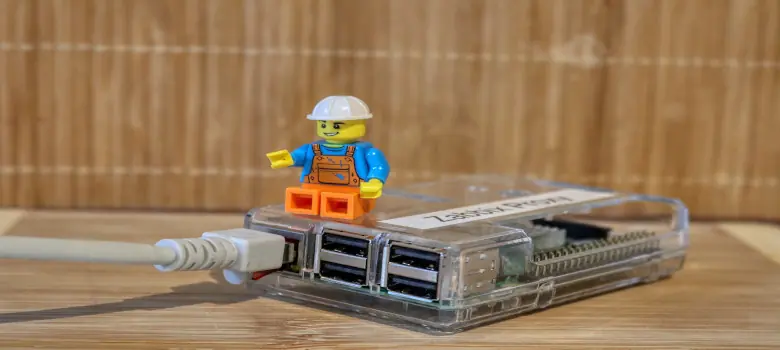
 IoT connectivity applied to smart city management.
That is why IoT adoption keeps accelerating. Much of the information explosion we've seen in recent years traces directly back to today's connectivity possibilities — and the trajectory for further improvement is still steep.
Continuous advances are already enabling better data-driven decisions and measurable gains in performance. The same data streams that optimize systems also reveal user behavior patterns — preferences, interests, and unmet needs — feeding improvements back into the experience itself.
The impact IoT is generating makes a strong case for digital transformation: designing, building, and deploying new software and instrumentation that streamlines a wide range of activities and raises the ceiling on what teams can know and accomplish.
IoT in Education and Healthcare
In education, IoT enables higher-quality instruction by enriching the classroom experience for both students and teachers. It also brings stronger security — both physical and digital — protecting the internal networks where student data is stored. Over time, that combination builds institutional trust and raises teacher productivity, compounding benefits for learning outcomes.
In healthcare, medical software built on IoT delivers more precise patient monitoring and supports more effective treatment protocols. IoT is a pillar of the Fourth Industrial Revolution, and its reach extends across sectors:
- Agriculture and rural communities
- Energy distribution
- Waste collection optimization
- Traffic congestion reduction
- Natural disaster prevention
- Air quality monitoring and adaptive public lighting
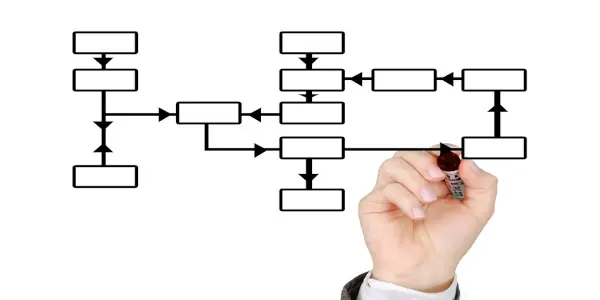 Distributed IoT networks applied to automating city processes.
Always-On Infrastructure for Cities
IoT-based networks can gather the data a city needs to run — and distributed architectures can automate entire classes of processes, dramatically reducing the need for human intervention and cutting both operational costs and the risk of human error.
These devices don't get sick, don't rest, and don't take days off. They transmit data and execute actions 24 hours a day, 365 days a year.
Reliability improves substantially when dedicated transmission networks are used instead of shared media. A private network also opens the door to new service-provider business models, making it possible to bundle multiple city services onto a single integrated platform.
The net result is a higher quality of life for residents — better services, more responsively delivered. That's something every city should be working toward.
References
Engineer Nixon Cedeño — ncedeno@innotica.net — LinkedIn