
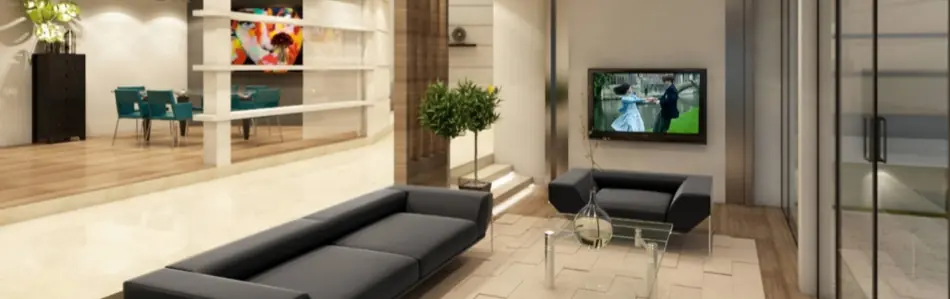
Smart Homes: Point Solutions vs. Subsystem Integration
30 August 2016 by Carlos Dobobuto
In today's construction industry, "smart" buildings, homes, and developments are an increasingly common reality — and the term tends to call up images straight from films and comics, where residents interact with their spaces in ways that once seemed purely fictional.
A popular assumption is that building a smart or automated home is simply a matter of acquiring the right gadgets: a network-connected thermostat here, a motion-activated lighting sensor there, a home theater system tying together multimedia, and a collection of other devices each handling a specific function.
The real potential of intelligence and automation — in both individual residences and the developments that contain them — lies somewhere else entirely: in the integration of the subsystems that make up a building and its surrounding infrastructure.
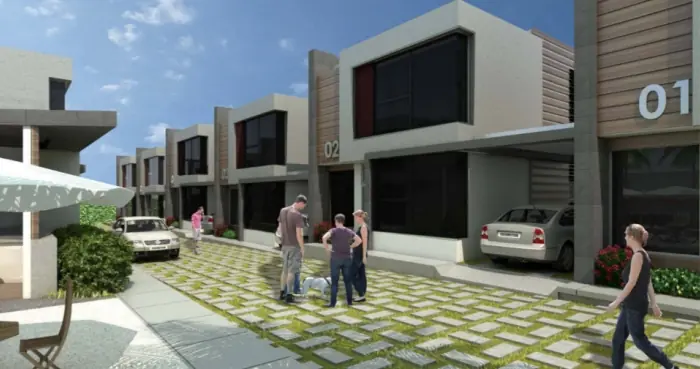 © NOGARQ / homify.com.ve
Subsystem integration enables the various traditional installations within a building to share information with one another. The primary objective is to deliver four core benefits: comprehensive security for both occupants and infrastructure, timely communication of actions and events, energy efficiency across all connected elements, and genuine comfort for owners, facility managers, and maintenance directors alike.
The Integrated Control Network
The integrated control network in any installation is made up of a variety of components that come together to address a specific need. At their core, these components are sensors or detectors, controllers, and actuators — working in concert to make automatic decisions about the areas or sub-networks they govern.
Building a true integrated automation and control network requires a Subsystem Integration Project developed by a qualified specialist. That specialist must hold working sessions with every stakeholder involved in the installation: the engineering teams responsible for lighting, HVAC, electrical distribution, pumping systems, irrigation, access control, and more.
Benefits for Designers, Contractors, and Owners
For designers and contractors, this approach opens the door to genuinely differentiated projects. It also unlocks meaningful points toward energy certifications such as LEED (Leadership in Energy and Environmental Design), while extending the useful life of the building and its equipment.
Owners gain a clear, real-time picture of how their home is performing — and a longitudinal view over time. They can eliminate wasteful energy spending and know exactly what each area of the property costs to operate.
The Road Ahead for Integrated Automation
The future of integrated automation and control networks is, without question, a global one. Demanding schedules and rising energy costs are driving the need for open, standards-based technologies that simplify daily life, eliminate waste, and protect properties and cities.
The responsibility now falls on every construction professional to build the expertise needed to meet that demand — moving beyond conventional approaches and offering comprehensive solutions in markets as competitive as Latin America's.