

Developing Building Codes for Sustainable Construction
30 August 2016 by Lisgrett Bellorin
Current design decisions, material choices, and construction methods are driving up costs while accelerating the depletion of natural resources. That pressure falls on environmental quality at both the local and global scale.
Energy and water consumption resulting from poorly conceived design carries economic and environmental consequences that persist throughout a building's entire service life — and beyond.
This is precisely why investment decisions need to factor in energy savings and efficiency measures from the very start. Costs deferred rarely shrink; they compound.
The Case for Renewable Energy Standards in Construction
What this points to is a clear need to promote genuine energy-efficiency practices — ones that include the development and adoption of renewable energy sources.
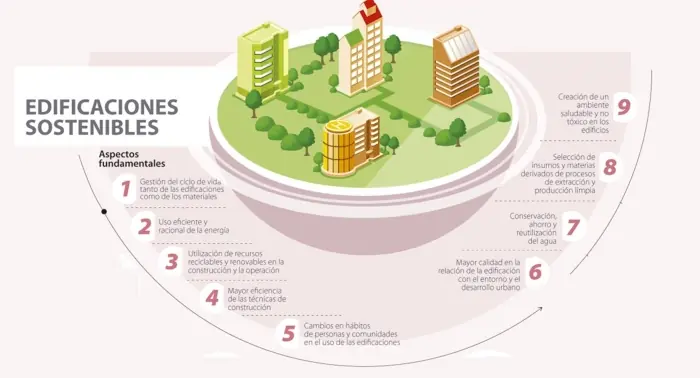
Those practices must translate into sustainable buildings: structures supported by a regulatory framework that defines the requirements any building must meet to reduce energy consumption to sustainable levels, and that mandates a portion of that consumption come from renewable sources.
 A building designed under sustainability criteria in an urban setting.
A National Reference Framework
The regulatory landscape needs a national reference standard — one that establishes baseline sustainability requirements for buildings, permanently reduces their environmental footprint, and ensures compatibility with international benchmarks.
Developing such a standard would actively encourage the design and construction of buildings under criteria of sustainability, efficiency, and responsible resource management. The downstream effect: lower consumption of non-renewable resources and fossil fuels, and a meaningful reduction in greenhouse gas emissions.
 A building constructed to energy-efficiency standards.
Building the Standard: Where to Start
Developing this framework begins with a thorough review of existing regulations. That review will inevitably surface gaps — areas requiring stricter standards, and aspects not yet addressed, particularly those tied to the building lifecycle and its direct and indirect environmental impact.
The standard must define minimum environmental criteria and requirements for sustainable buildings, with the explicit goal of mitigating environmental impact and optimizing the use of natural resources.
Critically, it must not overlook the socioeconomic dimensions that determine a building's viability, habitability, and integration into its urban and natural surroundings.
 Lifecycle diagram illustrating the relationship between a building's phases and its environmental impact.
A Collaborative Effort
An effective standard can only emerge from a joint effort among all stakeholders with an interest in accelerating the transition to sustainable construction practices — practices that protect the environment and improve the health, comfort, and productivity of the people who live and work in these buildings.