
The Security Challenge in IoT
13 May 2020 by Nixon Cedeño
The Internet of Things (IoT) has become a defining topic across the technology industry, policy circles, and engineering communities — and it has made front-page news in both specialized and mainstream media.
The technology spans a wide range of networked products, systems, and sensors. These devices leverage advances in computing power, electronics miniaturization, and network interconnection to deliver capabilities that simply weren't possible before.
Conferences, reports, and news articles are dissecting the potential impact of the IoT — from new market opportunities and business models to serious concerns about security, privacy, and technical interoperability.
Consumer products, durable goods, vehicles, industrial components, utility infrastructure, sensors, and everyday objects are being combined with Internet connectivity and powerful data analytics. The promise: a fundamental transformation in how we work, live, and play.
The projected scale is striking. Some estimates anticipate up to 100 billion IoT-connected devices by 2025, with an economic impact reaching $11 trillion.
Yet IoT also presents real challenges that could limit those gains. Reports of attacks on Internet-connected devices, fears of mass surveillance, and privacy concerns have already captured public attention. Technical hurdles remain — and new policy, legal, and development challenges are emerging alongside them.
The term "Internet of Things" generally refers to scenarios where network connectivity and computing capability extend to objects, sensors, and everyday items not traditionally considered computers — enabling these devices to generate, exchange, and consume data with minimal human intervention. No single universal definition exists, however.
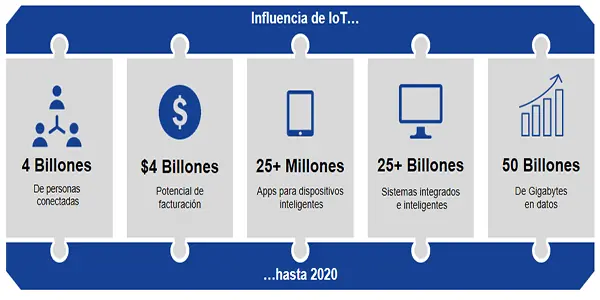 A representation of the connected-device network that makes up the IoT.
Key Issues Surrounding IoT
Five themes come up consistently in serious discussions about the Internet of Things:
-
Security: Security considerations are not new to information technology, but many IoT deployments introduce new and distinct security challenges. Addressing them must be a fundamental priority. Users need to be able to trust that IoT devices and associated data services are secure and free of exploitable vulnerabilities — especially as this technology becomes more pervasive and embedded in daily life.
-
Privacy: Realizing IoT's potential depends on strategies that respect individual privacy choices across a wide spectrum of expectations. Privacy rights and user expectations are essential to maintaining trust in Internet-connected devices and the services built around them.
-
Interoperability: A fragmented landscape of proprietary IoT implementations could undermine value for users and industry alike. Full interoperability between products and services isn't always possible or necessary — but buyers will hesitate to invest in IoT if integration is inflexible, ownership is complex, or switching vendors feels like a trap.
-
Legal, Regulatory, and Rights Frameworks: IoT devices raise new regulatory and legal questions while amplifying existing ones. These issues are broad in scope, and the rapid pace of IoT development often outstrips the ability of legal and regulatory structures to keep up.
-
Emerging Economies and Development: IoT holds genuine promise for social and economic advancement in developing economies — including areas such as sustainable agriculture, water quality and management, healthcare, industrialization, and environmental monitoring. In that sense, IoT is a concrete tool for advancing the United Nations Sustainable Development Goals.
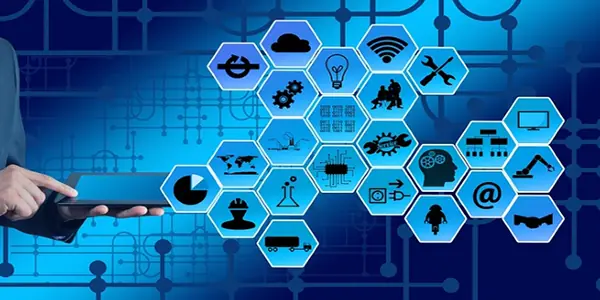 IoT applications across key sectors: agriculture, healthcare, and urban management.
The concept of combining computers, sensors, and networks to monitor and control devices has existed for decades. What's different now is the convergence of key technologies and market trends — and that convergence is opening a new chapter for the Internet of Things.
IoT promises a fully interconnected "smart" world in which the relationships between objects, their environments, and people become increasingly intertwined. An omnipresent fabric of Internet-connected devices could fundamentally redefine what it means to be "online."
Nixon Cedeño, Engineer ncedeno@innotica.net LinkedIn
References
- Internet Society (October 2015). The Internet of Things Report.