

Adapting the City to the 21st Century: Smart Cities as a Real Necessity
15 January 2016 by Jonny Cabrera
Smart Cities: A Real Necessity
Cities have historically defined societies across the globe. An exact definition is elusive — the concept is shaped by too many interpretations — but we can describe what cities are well enough to make sense of the environments where millions of people live their daily lives.
"The city is a physical, tangible reality. But it is also, unequivocally, a social construct: the project of a society at a specific place and moment, with its ideology, its culture, its ethics and values, and its social relations in interdependence with an always-complex economy." [1]
The first permanent settlements date back more than five thousand years. Originally simple structures meeting immediate needs, they gradually became centers for specialized occupations, trade, food production, and territorial influence.
As those settlements merged and grew, the first cities emerged — and with them, more complex social structures that gave rise to the earliest civilizations and empires.
 Urban growth places mounting demands on city services and infrastructure.
Today, cities move to the rhythm set by the financial, commercial, and industrial centers around which most daily activity revolves. That reality drives an ever-growing demand for services capable of meeting the needs generated by these dense population clusters — and those demands increase every year.
The challenge is not simply providing jobs. It means improving the basic services that guarantee a better quality of life. Energy, waste management, transportation, road networks, water management, and communications are just some of the problems cities face today — and no country in the world is exempt.
The only viable path forward is to modernize and manage city resources efficiently, drawing on the data that any urban environment generates every single day.
Smart Cities
Looking ahead, the concept of the smart city is becoming increasingly central to urban planning. Like the city itself, its definition resists easy formulation. According to Mathieu Paumard, "a smart city refers to a type of sustainability-based urban development capable of adequately responding to the basic needs of institutions, businesses, and residents — both economically and across operational, social, and environmental dimensions." [2]
Any effort to reform and reconceptualize cities must account for the integration of information technologies to interact with, monitor, and efficiently manage the many subsystems that converge under this emerging model. The objective is to adapt to a century that has barely begun.
The problems are well understood. The solutions already exist. Moving from a concept that sounds utopian to one that works in practice requires knowledge, accumulated experience, investment — and above all, political will to make the leap. This is not a marketing exercise: cities either evolve or they remain trapped in an unsustainable spiral of resource consumption.
The City as a Major Energy Consumer
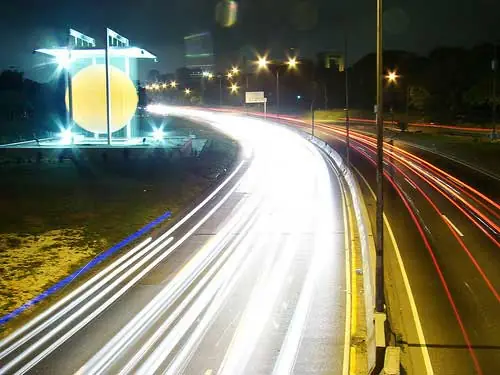 Public lighting and communications networks represent a significant share of urban energy consumption.
The standard control technologies available today make the necessary reforms achievable. System scalability is the key: it enables investment plans structured across short-, medium-, and long-term horizons.
Specific subsystems can be defined and prioritized — public lighting, CCTV, traffic signals, public safety, irrigation systems, and more — and brought together under a single monitoring and control platform. That unified approach avoids the operational fragmentation that comes with managing multiple, siloed supervision systems.
The work must begin at the design stage of any reform. Simply specifying pre-installation provisions for control systems is already a meaningful step. Engineering teams should also be required to work with open communication protocols, which ensures that no administration becomes locked into a particular vendor, product line, or maintenance contractor.
That freedom to decide and act is the cornerstone of open-standard systems — LonWorks, KNX, BACnet, and IP — on which tailored solutions must be built to bring cities in line with the smart city model.
The benefits extend well beyond energy savings. At the maintenance level, these systems provide real-time visibility into cable theft, unauthorized electricity consumption, and infrastructure condition — making predictive and preventive maintenance the norm rather than the exception. They also enable advance procurement of materials to stay ahead of renewal cycles.
The result is a public lighting system that not only protects the investments made in it, but can communicate its own status at any moment.
A Multidisciplinary Challenge
Transforming a city into a smart city is a genuine challenge. The complexity lies in coordinating efforts in the right direction, which demands trained professionals who can provide the technical guidance the process requires.
Investment from both the public sector and private industry is equally essential — and the private sector stands to gain from new business models built around the services being integrated. Ultimately, this is a multidisciplinary effort, and that collaboration is what makes more efficient cities possible.
References
- Definition of the city as a social construct — source unspecified in the original.
- Mathieu Paumard — definition of the smart city.