

Taking Control of Your Environment
3 February 2016 by Carlos Dobobuto
One of technology's greatest challenges is improving quality of life. Over the years we've watched it reshape how we live — and that's prompted a question worth taking seriously: how do we put it to work every day?
The answer, increasingly, lies in Integrated Automation and Control Networks. Their roots go back to what was — and still largely is — a misunderstood concept: home automation (domótica). Early implementations covered timed lighting switches, multimedia systems, access control, and security. Those building blocks laid the groundwork for today's open, interoperable automation protocols.
These networks enable complete management of every system and area within a facility, responding dynamically to both internal and external conditions. The goal is always the same: maximum efficiency — which means maximum user comfort without the energy bill to match.
Integrated Automation and Control Networks
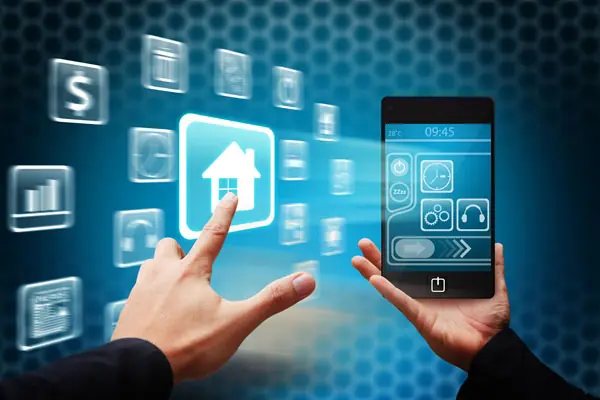 A residential installation featuring integrated automation and control systems.
These networks apply across a wide range of building types — from single-family homes to urban-scale developments and, critically, tertiary buildings. That last category covers any non-residential construction: office buildings, shopping centers, schools, medical facilities, and similar.
In residential settings, today's automation networks deliver a measurable improvement in quality of life by addressing both basic and specialized needs. They enable centralized control of HVAC, lighting, access control, and intrusion detection. The home adjusts automatically to changing conditions: outdoor temperature, humidity, wind load at a given moment.
Owners can also activate surveillance and presence simulation remotely from any internet-connected device. And for residents with disabilities, these networks are transformative — adapted installations give people the freedom to carry out daily activities independently.
The Benefits of Automation Networks
For everyone involved in a tertiary building — users, administrators, owners, designers, and contractors — Integrated Automation and Control Networks provide a powerful platform for management and oversight.
They simplify operations and maintenance while ensuring efficient energy use throughout the building, consolidating all necessary systems onto a single network:
- Electrical systems
- Energy metering
- HVAC
- Lighting
- Access control
- Carbon monoxide and/or carbon dioxide monitoring
- Plumbing and sanitary systems
- Security
- Fire suppression
- Stairwell pressurization
- Irrigation systems
- CCTV
 LEED (Leadership in Energy & Environmental Design) certification.
For designers and contractors, this kind of platform creates genuinely differentiated projects, contributes points toward energy certifications such as LEED, and extends the service life of the building and its equipment.
Administrators and owners gain something equally valuable: real-time and historical visibility into how their facility is actually performing. That means no more wasted spend from energy misuse, and a clear picture of operating costs by area — all accessible from a phone, a laptop, or a desk.
This applies across the full spectrum, from large corporate headquarters to small commercial premises.
The Road Ahead
The trajectory for Integrated Automation and Control Networks is global. Demanding schedules and rising energy costs are pushing building owners and operators toward open, standards-based technology — not as a luxury, but as a practical necessity for managing costs and protecting assets.
The responsibility now falls on construction professionals to build the expertise that today's market requires. Traditional approaches aren't disappearing overnight, but clients — particularly in competitive markets — increasingly expect integrated, intelligent solutions. That expectation is only going to grow.