
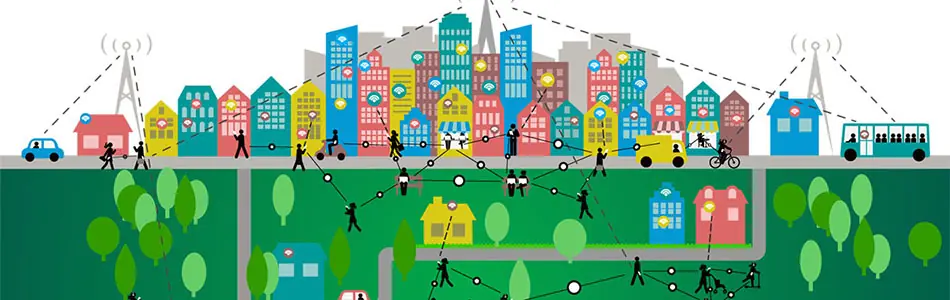
Big Data for Smart Cities
8 August 2016 by Luis (Güette) Güette
A smart city uses information and communications technology to pursue four core goals:
- Sustainable growth.
- Higher quality of life for residents.
- More efficient use of available resources.
- Active participation from citizens.
The concept emerges from the need to balance every dimension of urban life. Projections suggest that close to 90% of the world's population will live in cities in the near future, which makes better governance essential. The biggest challenges cluster around a few themes:
- Energy generation, transmission, and distribution.
- CO₂ emissions.
- Transportation planning.
- Natural resource management.
- Public health and safety services.
An ideal smart city is built on four interconnected subsystems:
- Distributed Generation: energy production is decentralized and draws from multiple sources, particularly renewables.
- Smart Grids: transmission and distribution networks maintain two-way, real-time communication with the control center, enabling continuous monitoring and rapid response.
- Smart Buildings: intelligent buildings deliver comfort, security, and remote monitoring — all while operating at peak energy efficiency.
- E-Mobility: integrating electric vehicles significantly cuts CO₂ emissions across the urban fleet.
Data flows in from sensors embedded in streetlights, water mains, cars, buses, trains, and more. Smart cities apply advanced Big Data analytics to that stream to improve services for their communities.
 Data flow visualization across a smart city.
Why Big Data Changes Everything
We had data management tools long before "Big Data" became the industry term. So what actually changed?
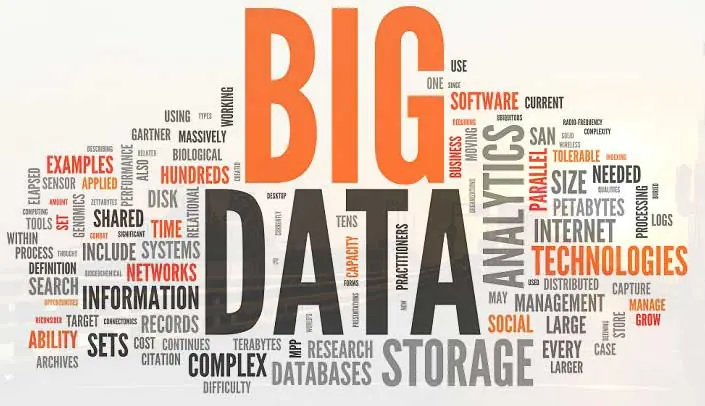
The scale. Roughly 2.5 quintillion bytes of data are generated every single day. To put that in perspective: a quintillion is a million billion. Ninety percent of all data ever collected has been produced in just the last two years. That trajectory is only steepening.
That growth demands fundamentally different techniques. As one useful framing puts it: "Big Data isn't about size — it's about granularity." The real capability is the ability to zoom in on something highly specific, even individual, within an enormous dataset.
Speed matters just as much as volume. In the past, police officers or firefighters learned about an incident only after someone reported it. Today, security cameras and sensor networks flag problems in real time — but processing that continuous feed fast enough to act on it requires a whole new class of infrastructure.
Data defined by volume, velocity, and variety is what we call Big Data. Conventional tools simply cannot keep up.
Machine Learning adds another layer. Defined as "the field of study that gives computers the ability to learn without being explicitly programmed," it enables predictive analysis and allows control systems to take automatic actions based on patterns they have learned over time.
Applications in Smart Cities
Advanced Big Data techniques are already at work in cities around the world. Here are five areas where the impact is clearest.
Traffic Statistics
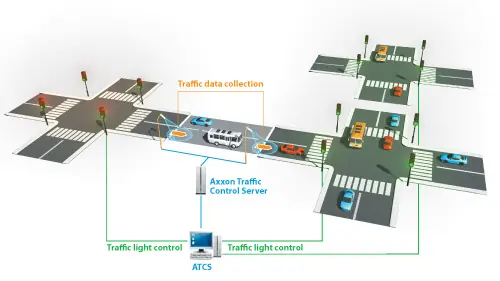 Real-time traffic analysis system.
Real-time traffic feeds can be analyzed to detect and predict congestion before it locks up a corridor. When the analysis indicates a bottleneck is forming, traffic signals adjust automatically to keep vehicles moving.
Smart Agriculture
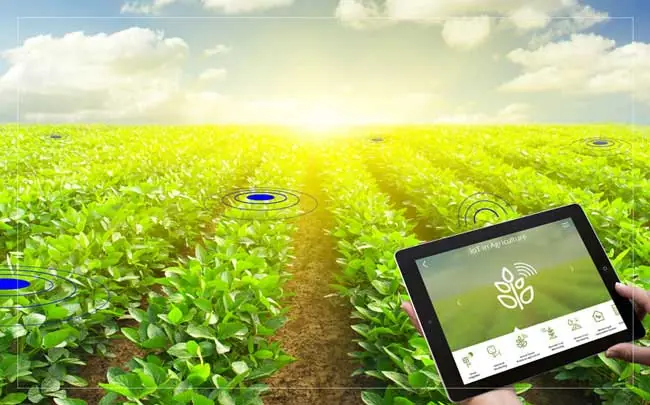 Greenhouse sensors optimizing agricultural production.
Big Data techniques translate directly to agriculture. Sensor networks inside greenhouses generate rich datasets that, once analyzed, allow growers to fine-tune every variable in the production process.
Energy Consumption
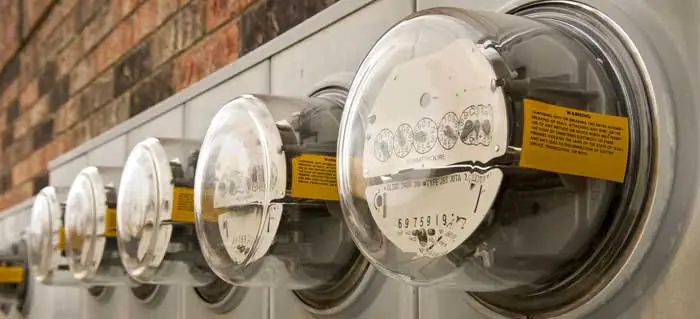 Smart metering tools applied across a building portfolio.
Big Data tools can aggregate and analyze hundreds of datasets from buildings across a city. This makes it possible to pinpoint which areas draw the most energy and to design targeted management strategies for those hotspots.
Healthcare
 Connected devices enabling remote patient monitoring.
Wearable devices like @TuRitmio can monitor vital signs and transmit that data to healthcare professionals in real time. With access to a rich, analyzed dataset, clinicians can prescribe highly personalized treatment based on each patient's daily routine. When something goes wrong, response times drop dramatically — an ambulance can be dispatched before a patient even calls for help.
Public Transport
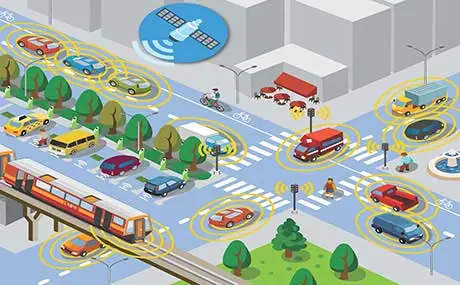 Optimizing public transport with Big Data.
Transit operators can use Big Data to predict the optimal maintenance windows for buses — minimizing service disruption — and to design routes that better match actual demand patterns.
Smart cities are closer than most people realize. Big Data will make our urban environments cleaner, better organized, and more sustainable. The technology is already here; the question is how quickly cities choose to put it to work.
Until next time.