

Control Systems as a Key Factor in Building Energy Optimization
23 September 2020 by Amilcar Castillo
Budget constraints shape nearly every construction project — from design through approval to execution. That's not a problem in itself; working within a budget is simply good engineering. The challenge arises when cost-cutting targets the wrong line items.
The most cost-effective outcome requires finding a balance between upfront expenditure and long-term operational benefits. Control systems are where that balance is most frequently, and most damagingly, lost.
The Current State of Building Control Systems
Control systems typically represent 20–30% of total project investment, yet they are the first component to be eliminated or stripped down during budget negotiations. The reason is almost always the same: decision-makers underestimate the operational value these systems deliver once the building is running.
A control system is made up of sensors and instruments that monitor the operational status of building services. HVAC — specifically air conditioning — is the most common and the highest energy consumer among them.
Ignoring proper control of these systems — scheduled on/off cycles, set point management, air quality monitoring, filter status, and dozens of additional variables — means the building will cost more to operate over its lifetime than it cost to build. That is not a hypothetical; it is a predictable outcome.
When the absence of proper control equipment is finally recognized and a retrofit is required, the cost is far greater than it would have been during original construction. Work must be carried out on a finished building: end finishes get damaged, new conduit runs are needed for instrumentation, and systems must be shut down for implementation and commissioning. Repair costs stack on top of installation costs.
The result is a large inventory of buildings — across every market — operating with comfort problems and unnecessary energy consumption, hemorrhaging money that a functioning control system would have saved.
The good news: there are solutions. They can be implemented in phases, spreading investment over time while progressively reducing energy consumption and improving comfort.
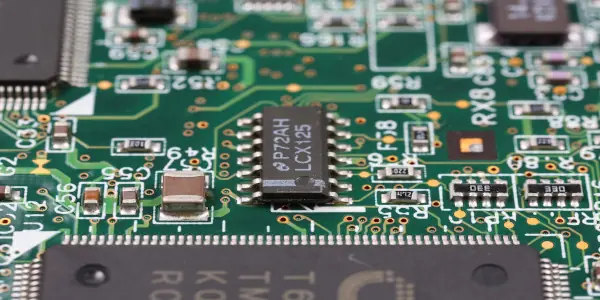 Control instrumentation installed in a commercial building.
Optimization as the Foundation of Sound Building Management
Step one: understand what you have. Map the building — what systems it contains, where they are located, equipment types, manufacturers, and model specifications. This information should already exist in the project's as-built documentation. If it does, use it to pull technical data sheets for each piece of equipment: efficiency parameters, startup curves, and optimal operating points. This is the context you need before touching anything.
Step two: define what to measure. Once the technical data is in hand, determine which parameters need to be monitored and recorded to characterize current system behavior over time. This produces an operational baseline — the reference point against which every future improvement is measured.
What doesn't get measured cannot be controlled. This is not a slogan; it is the practical constraint that makes everything else possible.
With variables and parameters defined, engage your equipment suppliers or manufacturers to identify instrumentation options that can capture and log system behavior. Once the selected solution is implemented and the baseline is established, plan the adjustments.
Tune the system components against their technical specifications and design parameters, always with qualified technical personnel involved in the intervention. After the first round of tuning, monitor the measured impact for at least seven days before drawing conclusions. Repeat the cycle — gradually and deliberately — until you reach the fine line between peak efficiency and occupant comfort.
Changes must be incremental and controlled. Pushing a system out of its operating range is easy; recovering from it costs time and money. Environmental conditions — particularly relevant for HVAC — will shift seasonally and must be reviewed on an ongoing basis.
Once you know the building's systems thoroughly, have real operational data in hand, and have achieved meaningful savings through mechanical and control adjustments, it's time to raise the bar.
Study the market: what equipment leads in efficiency today? What technologies can integrate with the existing system as configured? Consult suppliers, manufacturers, and colleagues about what has worked in comparable applications. Build economic proposals grounded in concrete return-on-investment projections — the kind that are compelling to a building owner precisely because they are evidence-based.
Conclusions
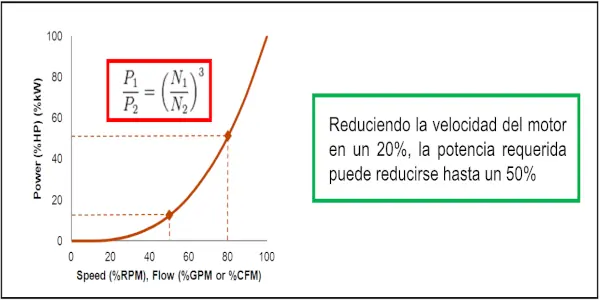 Variable frequency drives reduce electrical consumption in pumps and fans by exploiting the affinity laws.
Variable frequency drives (VFDs) are one of the most efficient tools available for reducing electrical consumption. Quadratic torque loads — pumps and fans — follow the affinity laws, which describe a cubic relationship between rotational speed and power draw.
In practical terms: a 20% reduction in speed produces approximately a 50% reduction in power consumption. That ratio makes VFDs one of the fastest-payback interventions available, with measurable results in a very short timeframe.
The broader takeaway is this: building systems require continuous attention. Whether through refined control strategies or new technology adoption, the pursuit of lower consumption and better performance is ongoing — not a one-time project.
Amilcar Castillo, Engineer HVAC Automation Manager, Climatizadora — Panama Academic Instructor — Campus Innotica af.acastillo@gmail.com LinkedIn