

Defining Requirements in Building Automation Projects
20 June 2016 by Carlos Dobobuto
Defining Requirements
More and more building subsystems ship with their own management software — from access control (a system that makes little sense without it) to applications for lighting, HVAC, elevators, water pumps, irrigation, energy metering, and motorized shading. Deciding which of those applications a specific project actually needs is one of the harder questions owners and project directors face.
The wrong answer is expensive. Owners carry the final responsibility for decisions that can waste significant portions of a construction budget, yet the technical review of competing proposals usually falls to the systems engineer or, when the project is lucky, to the operations and maintenance director. In most cases, neither has the background to guarantee that what each specialist proposes will actually serve the facility's short-, medium-, and long-term management needs.
Today's requirements will not be tomorrow's requirements — especially given the pace of technological change and the major shifts expected in both energy policy and environmental regulation.
Isolated Solutions vs. Integrated Solutions
 Isolated systems vs. an integrated automation and control network.
Every subsystem vendor will propose its own software or application for managing what it supplies. Buy each one separately and you end up with a collection of disconnected islands — each typically requiring its own dedicated PC and monitor under constant supervision.
The deeper problem with that siloed approach is that cross-system control logic becomes impossible. You cannot configure a strategy that switches hotel-room HVAC to an energy-saving mode when a window opens, nor trigger coordinated responses across multiple subsystems when the fire-protection panel activates.
The technology lead must verify that each proposed subsystem component meets the performance expectations defined by its discipline, while also ensuring that the right electronic instrumentation, communication ports, and gateways are included. Those interfaces are what allow every piece of equipment to join a unified building management network — one that monitors and controls each element, collects data and signals from every subsystem, triggers actions across others, and reports events to operations and maintenance staff.
Supervision and control platforms built on isolated systems will always cost more than integrated automation and control networks. License and server costs can effectively double, and — more critically — the facility will never accumulate the unified dataset needed to make sound operational decisions and pursue maximum efficiency over time.
Identifying Project Needs
 Identifying project needs is the first step toward avoiding ill-fitting solutions.
Construction company owners often travel internationally and, in doing so, see what comparable projects in other markets have implemented. When they return to plan their own developments, they naturally want to replicate features they found compelling — and they task their teams with researching or contracting firms that can deliver them, whether local or international.
That instinct is sound. The problem starts when the person assigned to evaluate options lacks the technical background to navigate a market full of proprietary and open-technology solutions, each claiming to address a different set of needs — some of which may not even apply to the project at hand.
Another common pattern stems from the strong influence of North American construction culture, particularly among developers who own properties in the United States. They arrive familiar with the solutions installed in those buildings, which tend to be proprietary systems oriented primarily toward comfort — broadly, the American residential automation philosophy. When they want to implement automation and control in their local projects, they default to what they already know, even when those systems are not suited to the specific demands of the work ahead.
Defining what a project truly needs requires expert guidance. A qualified specialist can walk the owner through the advantages and trade-offs of each technology relative to the project at hand, and can produce the documentation that translates those needs into concrete requirements for each discipline involved in the building.
With that documentation in hand, every member of the multidisciplinary project team knows exactly what their responsibility is, and the owner has a clear view of the implementation costs for each specialty's management layer.
Running the Design Phase
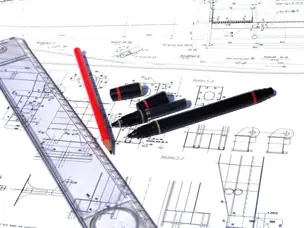 The design engineering package includes a descriptive report, drawings, functional diagrams, and technical specifications.
Once each specialist's input is collected and the automation and control networks are sized to support the required functionality, the design engineering package can be produced. Like any engineering discipline on the project, this means developing a descriptive report, pre-installation drawings, functional diagrams, technical specifications, and quantity take-offs.
With that design in hand, the owner can make an informed decision about which features to include — and whether to implement the full network during construction or install a minimal baseline now and expand it incrementally over time.
That phased model is worth considering carefully. It lets the developer commission a working core system from day one while building in the infrastructure to support future expansion as budgets and operational needs evolve.
The Client's Decision
 The final decision rests with the owner — ideally backed by specialized advisory.
There's a well-worn saying: "The customer is always right." Far be it from me to argue with it. What I will say is that the owner will always hold the final call: stick with traditional operations without any management platform, procure isolated systems, or adopt an integrated vision where every stakeholder contributes to a coherent facility-wide infrastructure.
Buildings are long-lived assets. Their designs need to serve current needs and remain adaptable to future ones — which is precisely why specialist advisory is not optional. It is the most effective way to avoid spending money that achieves nothing.
For that guidance, look to professionals certified by the leading international organizations in automation and control: LonMark International and the KNX Association. Sustainability advisory is equally critical; the U.S. Green Building Council offers LEED (Leadership in Energy and Environmental Design) certification, which provides a structured framework for energy efficiency and environmental protection across the full project.
At INNOTICA, you will find professionals certified by each of these international bodies, with deep experience in this type of advisory engagement, ready to support your project locally.
To arrange a consultation — in any country in the region — reach us at info@innotica.com.ve or call +58 212-6386541. We are happy to work with you on-site or remotely, as the project requires.