

Renewable Energy: Venezuela's Untapped Potential
13 June 2016 by Jonny Cabrera
Reflections on Venezuela's Missed Opportunity — and What Needs to Change
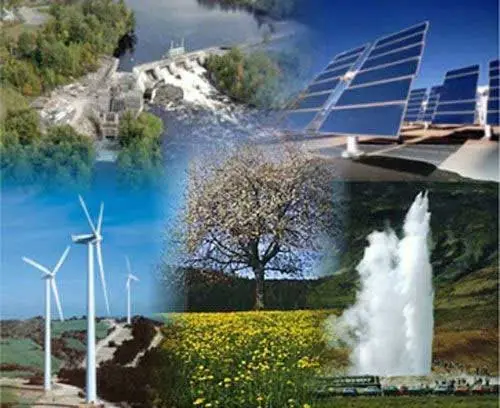 Renewable energy sources as an alternative to fossil fuels.
The Sun has powered this planet for millions of years — our original, inexhaustible fuel source. Nearly every natural process depends on that energy: winds, tides, and the slow biological cycles that, over geological time, produced the fossil fuels we now burn.
Life on Earth runs on energy. The human species, however, demands ever-increasing amounts of it to sustain daily activity, keep economies functioning, and hold civilization together.
We gravitated toward cheap but heavily polluting fuels — first wood, then coal, then oil and gas. Only when the environmental damage was already severe did the broader reckoning begin. Decades of global conversation about renewable alternatives followed, yet serious, committed policy action has materialized in only a handful of countries, and only recently.
Venezuela as a Case Study
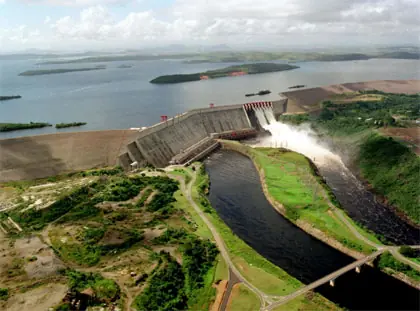 Venezuela's geography offers privileged access to multiple renewable energy sources.
Venezuela placed an early bet on hydropower, and for a time it paid off. At its peak, hydroelectric generation covered around 70% of national demand. That surplus allowed Venezuela to export electricity to northern Brazil and Colombia.
The success also bred complacency. With cheap, abundant hydro power and a relatively low level of industrial development, the country saw little urgency in diversifying its energy mix — despite having the geographic conditions to exploit wind, solar, and tidal resources on a significant scale.
Opportunities Left on the Table
Hydropower alone was never a sustainable long-term strategy, and this is now Venezuela's second major electricity crisis in under a decade — both driven by drought. The evidence points in one direction: climate change will make rainfall less reliable over time, not more.
The groundwork for a serious wind energy program should have been laid five years ago. Political inconsistency and endemic corruption have blocked the development of a wind farm corridor between the Guajira and Paraguaná peninsulas. Estimates suggest that harnessing coastal wind energy across Venezuela's eastern and western shores could generate close to 20% of average daily national energy demand.
Beyond wind, Venezuela holds the highest average solar irradiance in Latin America, and studies indicate its coastline is well-suited for tidal energy generation. These are not fringe possibilities — they are proven, scalable technologies sitting idle against a backdrop of chronic blackouts.
The opportunity exists. The need is undeniable. What's missing is the financing and the political will to act.
No More Excuses — Time to Commit
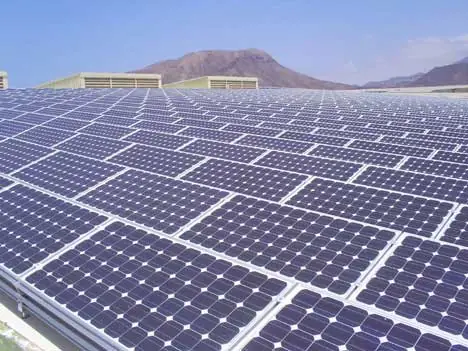 Photovoltaic, wind, and geothermal technologies are now economically viable at scale.
Cost is no longer a credible objection. Utility-scale photovoltaics have fallen below one dollar per watt generated over the past decade. The same cost curve applies to solar thermal, wind, and geothermal. The economics have shifted decisively.
Neither is technical immaturity a valid excuse. No technology is ever mature enough before the first deployment — the point is to start, and to integrate renewables as an additional generation source rather than waiting for a perfect replacement. Proposals should prioritize self-consumption over battery storage: batteries introduce maintenance obligations and end-of-life recycling challenges that often outweigh their cost advantages at this stage.
The harder question is whether Venezuela, as a country, is structurally ready to support this transition. Is it contradictory for the nation with the world's largest proven fossil fuel reserves to pursue clean energy? Not at all. Venezuela has always been a fuel-exporting economy — that 80-year model doesn't disappear overnight, nor should it have to. Oil and gas can continue serving export markets while a domestic renewable sector takes root. These are not mutually exclusive paths.
A Final Reckoning
The real work lies in the political and social dimensions. Legislative reform to the National Electrical System framework is essential: it needs to define clear mechanisms for self-consumption, net metering (the buying and selling of surplus energy), and the licensing of both large and small independent power producers.
A building code requirement — mandating that all new construction meet a defined share of its energy demand through renewable sources — would be a concrete, enforceable step in the right direction.
On the social side, citizens need a clearer picture of what energy actually costs: the infrastructure, the maintenance, and how everyday consumption patterns aggregate into national demand.
At the government level, responding to El Niño events after the fact is not a strategy. The starting point is the state's own footprint — public lighting and government buildings. Declaring non-working days to reduce demand is theater. Workers don't disappear; they go home and consume energy there instead, with no controls whatsoever. Real policy sets the example: if the public sector doesn't adopt measurable, context-appropriate energy measures, it has no standing to ask citizens to do so.
Finally, education in renewable energy needs to reach every level of society — schools, universities, communities. The national conversation is still dominated by oil. It needs to make room for what comes after: the technologies, the business models, and the engineering careers that a diversified energy economy makes possible.
That shift in thinking is how new generations of Venezuelan engineers and entrepreneurs start building on solar, wind, and tidal potential — while the country's hydrocarbons are preserved for export to markets that still need them.