
IoT: An Introduction and a Look at the Future
6 June 2016 by Eduardo García Martín
Hans Vestberg, CEO of Ericsson, once put it this way:
"If one person is connected to the network, it changes their life. But if every thing and every object is connected, it changes the world."
Internet of Things — IoT — is a somewhat abstract concept, and I emphasize that deliberately, because by the end you'll see why. It has been gaining considerable traction over recent years.
The name does a reasonable job of illustrating the idea: everyday objects connected to the internet. But the reality runs much deeper than that.
IoT is a double-edged sword that can easily lead designers and experts into a focus problem. The "things" — the end products — can take an enormous variety of forms, and that variability is simultaneously the greatest asset and the greatest liability of the field.
What Defines the Internet of Things?
Hardware and Software
The combination of hardware and software provides the "intelligent spark" that transforms an ordinary product into a smart one. That combination, however, can take many different forms.
Consider wearables: virtually all of them offload their actual computation to a paired smartphone. By contrast, our startup project @TuRitmio — winner of the 5th Caracas StartUp Weekend 2015 and still in development at the time of writing — has enough onboard processing power to handle signal processing entirely on its own.
Connectivity
Connectivity enables compatibility and network access regardless of the surrounding environment. It means we can consume and produce data whether we're in a large city or a small town, whether our water heater is one brand or another, and regardless of which internet service provider we use.
Sensing
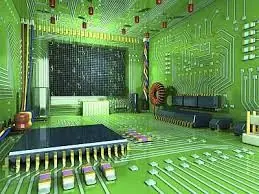 Detection and recognition technologies that bridge the physical world and digital systems.
Sensing and recognition technologies provide the means to build experiences that reflect genuine awareness of the physical world and the people in it.
Our own senses — our ability to perceive and understand the environment around us — are what allow us to navigate and interact with the world every day. Sensors are what carry that same capability into things.
Interaction
 The interaction between the physical world, people, and things is the core of the IoT ecosystem.
Interaction establishes the essential communication between the physical world, people, and objects. Whether we're talking about a smart home or a farm equipped with precision-agriculture technology, the expressiveness of the system is what determines whether a product actually engages intelligently with the real world.
And let's be clear: that means far more than presenting data to users through visually appealing interfaces. It requires a coherent strategy across every layer of the system — from the servers storing the data, to the environmental conditions captured by sensors, to the preferences and rules set by the person who owns or manages the building.
Energy
Without energy, none of our devices function in the real world — that much is obvious. The harder problem is that we cannot build tens of billions of things that run on batteries.
Energy storage is technically complex, and batteries degrade over time. Worse, the energy in a battery can only be used by the device that holds it. That inability to share energy across devices is a genuine obstacle to any vision of a truly intelligent world.
 Energy generation and distribution are foundational pillars of the intelligent ecosystem.
Energy generation, energy efficiency, and the full infrastructure required to transport and deliver that energy are necessary components of any intelligent ecosystem we set out to design.
I'll go deeper on this topic in a future post, but I want to plant the idea here: today's energy infrastructure is fundamentally inadequate and lacks the strategic focus needed to support the intelligent future we're all working toward.
Security
IoT brings real gains — efficiency, previously unexplored capabilities, and much more. But security cannot be an afterthought.
Security is everyone's problem in IoT: creators, intermediaries, and end users alike. We need to design secure architectures in both the traditional sense (electrical risk, physical safety) and the digital sense (cybersecurity, privacy). That includes the proper stewardship of personal data and the protection of physical well-being.
Establishing clear evaluation criteria for networks, data, devices, and the specialists who manage them leads us to a new security paradigm — one that must scale without friction and that necessarily involves every stakeholder: public institutions, private organizations, academic bodies, and corporations.
Where We're Headed
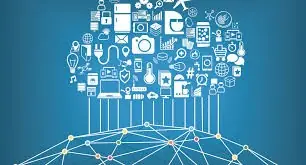 The Internet of Context (IoC) as the natural evolution of IoT.
We are moving toward a world enriched by more and better information about everything around us. We are in the era of context — with new challenges and, I would argue, a new internet: the Internet of Context (IoC).
I'm in the camp that believes the cloud will, in a sense, rain back down — that data will become most relevant when it is hosted and accessed in proximity to the things inside our homes, buildings, and smart cities.
That's how I see the Internet of Things, for now. In my next post, I'll share how our team got on at the 7th StartUp Weekend, held at the USB campus in Valle de Sartenejas, Caracas — and the new challenges we took on in Venezuela's technology entrepreneurship scene.