

Introduction to LEED: Benefits
30 May 2016 by Jonny Cabrera
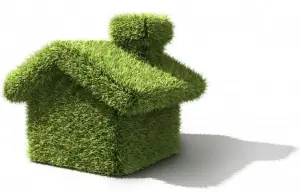 Sustainable construction oriented toward LEED certification.
LEED — Leadership in Energy and Environmental Design — is one of the most widely recognized certification systems for sustainable buildings in the world.
LEED touches on nearly every dimension of a project: design, construction, and long-term operation. The framework helps all stakeholders identify the decisions that matter most — optimizing natural resource use, improving occupant well-being, and maximizing economic return over the building's lifetime.
It is a practical tool for guiding everyone involved toward genuinely sustainable outcomes — from the owner's initial concept and the specialists' technical designs through construction execution, occupancy, and ongoing facility operation.
Every project phase is an opportunity to apply the right measures. That said, the earlier sustainability strategies are integrated, the lower the cost: retrofitting decisions that should have been made at the schematic design stage is expensive. Some operational strategies, however, require little capital and still contribute meaningfully to sustainability goals — so it is never too late to act.
Benefits
 International recognition that makes a project's sustainability commitment tangible.
Beyond establishing a credible sustainability benchmark, LEED provides internationally recognized certification that makes a project's environmental commitment visible and verifiable. Incorporating sustainable attributes benefits the environment, supports occupant health and comfort, and enables responsible economic growth — projecting a positive image that serves both the project's stakeholders and the surrounding community.
Among LEED's most tangible benefits is the reduction of operational costs, factoring in all the variables that compound over a building's service life.
Look at the current state of basic utility services: there is growing pressure to reduce dependence on centralized supply and to secure alternatives that meet demand reliably. Solutions range from backup systems — generator sets and water storage tanks — to renewable technologies such as rainwater harvesting and solar panels.
Even specifying energy-efficient fixtures and equipment reduces consumption directly, which in turn scales down the capacity — and cost — of any backup systems required.
When you view a building as a long-lived asset, optimizing resource efficiency is about more than managing today's utility bills. It is a response to a global shift away from wasteful energy culture toward policies that account for climate change and future generations — while driving competitive economic development through renewable energy generation.
In Conclusion
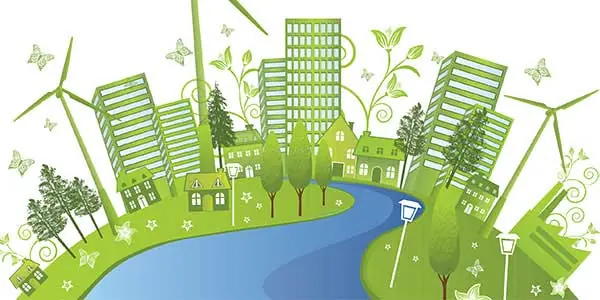 LEED certification as a long-term strategy for construction projects.
LEED includes a structured maintenance and operations plan that supports thorough, ongoing review of building systems. This reduces repair costs by identifying potential failures early and preventing unplanned downtime — a direct benefit to facility managers and owners alike.
Selecting durable, sustainable equipment and materials also extends the project's service life. The longevity of components reduces replacement frequency, offsetting maintenance budgets over time.
Finally, LEED certification gives a project a concrete, credible marketing asset. Communicating specific sustainable attributes — occupant comfort, operational efficiency, verified environmental performance — adds measurable value to the proposition in ways that generic claims cannot.