
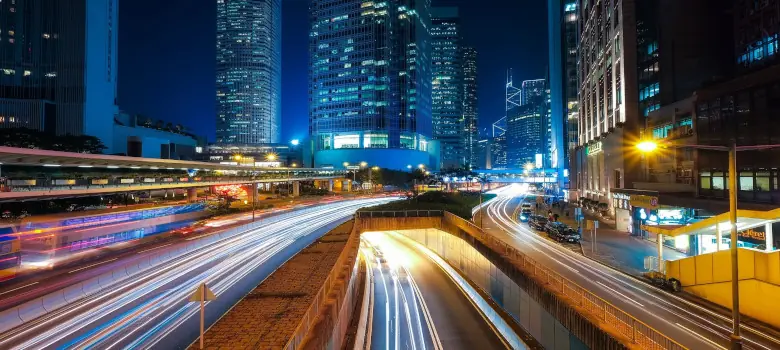
Hardware and Software Integration in Smart City Projects
12 May 2021 by Nixon Cedeño
Smart cities represent the evolution of the traditional urban environment through the application of information and communication technologies (ICT) to everyday city operations. Infrastructure and connected devices are being deployed across a broad and varied field of action — where energy efficiency, accessibility, mobility, pollution reduction, and sustainable resource management converge as common pillars in the comprehensive digital transformation of cities and their citizens.
A few figures set the context for where smart city development currently stands:
- Fewer than 5% of smart city projects have advanced to the development stage.
- Cities and smart developments that have progressed have integrated ICT infrastructure to improve urban operations and drive the digital transformation of city systems.
- They focus on human capital development through ICT-enabled governance, supporting knowledge-driven, sustainable urban growth fueled by creativity, innovation, and entrepreneurship among city stakeholders.
- Big Data is a central concept in the smart city model — it describes information and data assets characterized by volume, velocity, variety, variability, and value for multiple stakeholders, all of which demand high-capacity cloud services.
- These projects address a broad range of urban challenges through city regeneration: zero-carbon smart neighborhood infrastructure, intelligent energy resource management systems, water and waste networks, smart grids, intelligent traffic systems, and open civic data platforms.
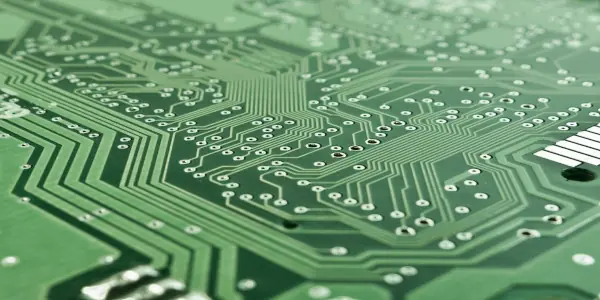 Technological infrastructure as the foundation of smart city projects.
So far, projects of this nature depend on finding a forward-thinking public official or a private investor willing to back them before they can move forward. The conventional construction industry presents another barrier: there is a persistent — and entirely false — assumption that incorporating technology or building sustainably drives up project costs dramatically.
What remains poorly understood is that return on investment can materialize in the short term. A building with a comprehensive automation and control system, for example, can become an attractive investment vehicle for both domestic and foreign capital.
These projects don't come together overnight. They require talented people to identify the specific needs of each initiative, and considerable time to validate that everything works as originally designed. Quality control is fundamental to building resilient systems.
The fact that many of these systems are custom-built adds another layer of complexity — and longer development timelines.
Data, Infrastructure, and Human Capital
Every project begins with the design and development of its infrastructure. That step is about deploying the technology that isn't visible — the layer that enables every building and city to operate at peak performance.
Data is the foundation of any smart city. Yet in practice, most stored data goes unused. This happens because organizations lack the qualified personnel to process and interpret that information — and identifying which data actually has value is one of the fundamental challenges in smart city development. Demand for data analysts and data scientists continues to grow sharply as a result.
 Data analysis is one of the core pillars of intelligent urban development.
Smart cities require both investment and technology deployment, but one of the most critical investments — and one that must be sustained over time — is the formation and development of human capital. As these technological developments advance (platform creation, hardware design, software development, physical construction), ensuring that education and training are not left behind is non-negotiable.
Training, Innovation, and Governance
Training will play a decisive role in advancing smart cities. Bringing in actors such as universities and technical schools will be a differentiating factor — smart developments require a skilled workforce to be built efficiently, sustainably, and responsibly.
It bears repeating because it is simply true: a smart city cannot be achieved without innovation. Improving the efficiency and sustainability of city services requires open communication and real integration among governments, businesses, and citizens.
Big Data, artificial intelligence (AI), and IoT are technologies that need to be understood and actively studied across sectors. The creation, integration, design, and improvement of software and hardware has the potential to radically transform the public sector — raising the quality of community services while reducing operating costs.
Delivering these services and smart infrastructure raises technical, social management, political, and ethical challenges that demand innovative thinking. These elements — combined with sound cybersecurity practices and operational continuity plans — are what will turn a city into a smart, sustainable, and stable one, capable of meeting the full expectations of its citizens.
Nixon Cedeño, Engineer — ncedeno@innotica.net — LinkedIn