
Methodologies for SCADA System Development
21 October 2020 by Mariel Guanipa
SCADA systems (Supervisory Control and Data Acquisition) enable data acquisition through hardware and software to monitor, collect, and process information in real time.
This combination of technological architecture demands a high level of engineering knowledge and process complexity — which makes structured working methodologies essentially non-negotiable. The goal is to deliver as much functionality as possible, on schedule, and at a high operational standard.
Initial Documentation
Every SCADA project starts with an initial documentation phase: a methodology for requirements gathering and analysis. The primary outputs are process documents, requirements documents, or engineering documents — different names for the same discipline.
These documents grow out of a prior methodological effort grounded in BIM (Building Information Modeling), which extends well beyond design phases. BIM is a collaborative working process for creating and managing a construction project — covering costs, schedules, and long-term maintenance.
It also functions as a digital information model that centralizes a building's data — geometry, spatial relationships, geometric information, and component quantities and properties — across its entire lifecycle.
From the BIM model, the team produces a Descriptive Report (Memoria Descriptiva) specifying the project's objectives, intended users, and scope. From there, information flows from the general to the specific, establishing the business context at both hardware and software levels.
On the hardware side, the documentation package includes equipment and device specifications, architectural and installation drawings, and block diagrams — used to analyze the behavior and coding of electronic equipment. With this in place, hardware programming can begin.
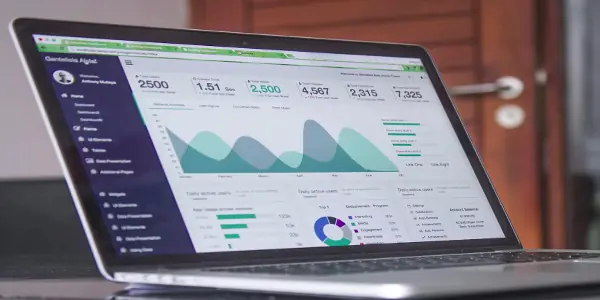 Typical SCADA system architecture showing its main components.
On the software side, the key input is a software requirements document — sometimes called a minimum software functionality specification. It captures the subsystems to be built, the variables to track, the events to generate, the modules involved, and the actions the system must perform. Software programming begins from this baseline.
Development Phase
With initial documentation complete, the project moves into the development and programming phase. A SCADA system must address three core processes: configuration, monitoring, and control.
The Product Owner is responsible for coordinating project requirements. Their role is to ensure the BIM model is continuously reviewed with the development team so that client requirements are met across cost, timeline, scope definition, and intended end use.
To manage this, the team builds a product backlog and prioritizes the three core processes — configuration, monitoring, and control — using agile methodologies, specifically SCRUM. This enables incremental iterative development, producing a functional deliverable at the end of each iteration.
Iterations are best understood as mini-projects, each targeting one subsystem at a time. Subsystems represent the product epics, typically organized by engineering discipline:
- Electrical control subsystem
- Water consumption subsystem
- HVAC and climate control subsystem
- And many more
Each iteration follows a consistent working process to produce a complete result that the client can benefit from incrementally. The team — hardware and software together — handles all tasks needed to complete the iteration, including testing and documentation, so the deliverable is ready to hand over with minimal friction.
Iterations run in sprints of no more than four weeks, carried out by the hardware and software teams according to the prioritized backlog. This cadence maintains constant feedback loops with stakeholders, ensuring development stays aligned with accurate, up-to-date information.
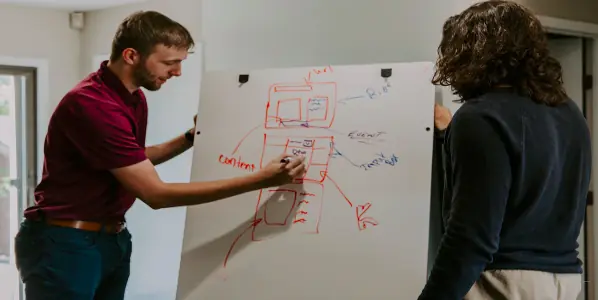 The SCRUM sprint cycle as applied to SCADA system development.
The overarching objective is to establish clear collaboration and execution standards from the outset — with defined roles that ensure the final BIM model delivers real value while making effective use of resources.
Installation, Commissioning, and Testing
Once development wraps up, installation and commissioning begin. When hardware and software are ready for a given subsystem, installation proceeds using a descriptive installation document that ensures compliance with international standards, applicable regulations, and communication protocol requirements.
After installation, a final round of real-time testing verifies system behavior and addresses any incidents or equipment failures before handover.
Conclusion
For technology projects of this nature — where collaborative work is essential, the final product is complex, and time and risk management are critical — agile methodologies are a strong fit.
They allow teams to adapt their working approach to the project's actual needs, responding quickly and flexibly as requirements evolve with the client or the environment.
María Rodríguez, Development Lead mguanipa@innotica.net · LinkedIn