

Project Management Stages and Requirements for Building Automation
14 October 2020 by Maria Teresa Rodriguez
Building automation improves day-to-day technical operations, simplifies routine tasks, and raises quality of life for occupants — while making the underlying infrastructure considerably easier to manage.
Whether you're automating a new facility or replacing an existing system, the process is complex and demands rigorous planning from the outset. Choosing the right system is never straightforward: a thorough upfront analysis is the difference between a well-executed project and a costly course correction mid-delivery.
Every project, regardless of domain, moves through defined stages — what the PMBOK calls the project life cycle. Smart building projects are no exception. The following are the key stages to get right if the final deliverable is going to meet expectations.
Feasibility Analysis
The first step is determining whether the project is viable — what it actually costs in financial, logistical, and operational terms, and whether the return justifies the investment. If costs significantly outpace returns, there need to be compelling reasons to proceed regardless.
A sound feasibility analysis covers at least the following:
- Preliminary scope assessment.
- Execution risk analysis.
- Feasibility review against timeline, cost, and quality targets.
- Opening a project tracking record in the company's project management tool.
 Planning and preliminary analysis in building automation projects.
Work Planning
This phase enumerates and details every task the project entails: the steps involved, the resources each requires, and estimates for cost, effort, and time. The agreed scope with the client is critical input here, as is a diagnostic of the building itself — specifically, whether the infrastructure is new or whether work will be done on top of an existing system.
Task planning varies depending on the type of engineering being applied:
- Conceptual engineering.
- Design engineering.
- Detailed engineering.
Project Execution
This is where planned tasks are carried out and documented: what obstacles arise, what results emerge, and all the information needed to feed the monitoring stage. Everything planned up to this point is now deployed.
The core activities are:
- Setting up the working environment.
- Assigning planned tasks to available resources.
- Executing planned tasks.
- Managing change requests.
Monitoring and Control
Here the team verifies that the process is delivering expected results and draws conclusions from the data collected during execution. Those conclusions drive strategy adjustments, corrective actions, and course corrections that keep the project on track toward the target outcome.
Four types of activities define this phase:
- Tracking tasks and planned milestones.
- Deliverable management (including quality control).
- Issue management.
- Generating progress reports.
Project Closeout
Closing a project out properly matters just as much as running it well. This stage involves a retrospective review of the entire process — cataloguing failures, unexpected events, and anything that deviated from plan — and producing a report that informs future projects. This is where the team learns.
When a project succeeds, closeout is also where those achievements are formally documented and preserved. Standard activities include:
- Formal project sign-off by all stakeholders.
- Project backup and archiving.
- Results analysis against initial estimates.
- Updating the knowledge base with lessons learned.
 Closeout and results documentation in smart building projects.
The Role of BIM in Project Management
The pace of technological change makes it worth asking whether each of these management stages benefits from a dedicated tool to streamline and validate the underlying processes. Building Information Modeling (BIM) has become the answer many teams reach for.
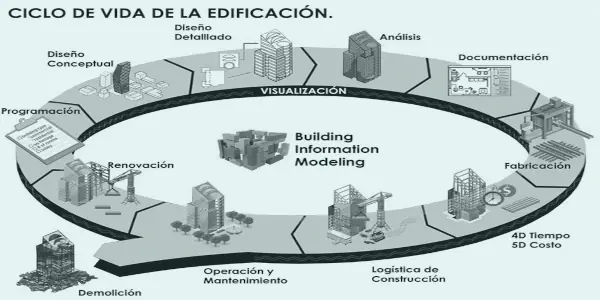
A BIM model supports project management by creating a structured communication channel among architects, engineers, contractors, and other stakeholders through a virtual model that integrates all specific, detailed information about the building. That integration spans pre-construction, the building's operational life, and eventual decommissioning.
The resulting documentation lets facility managers get up to speed quickly and access any critical building information on demand. Across project phases, BIM enables teams to:
- Verify that project and construction costs stay within budget — a fundamental condition for viability and success.
- Subdivide design files by specialty so each discipline works exclusively within its own scope, but against a shared model, reducing confusion and making the construction process more efficient.
- Clarify the human resources required, coordination dependencies, and any other factors that may affect the project schedule.
Across every stage of a smart building project, organizations benefit from adopting tools that consolidate traditional management requirements into a single platform — one that supports consistent, predictable delivery.
Engineer María Rodríguez Project Monitoring and Control mrodriguez@innotica.net · LinkedIn