
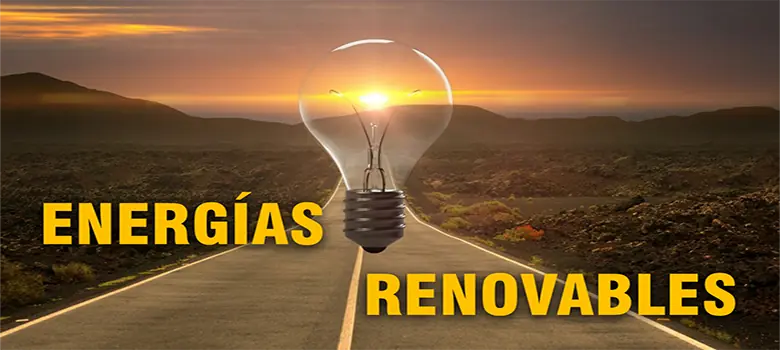
Renewable Energy and the Shift to a New Energy Mix
8 April 2020 by Christian Urbaez
Every day, humanity depends on enormous quantities of energy to keep civilization running — and the processes used to extract that energy are placing serious strain on the planet.
One of the most credible responses to the climate change we are already experiencing is a new energy model: a fundamental transformation of how energy is produced, distributed, and consumed. This means moving away from finite, non-renewable feedstocks toward renewable sources, greater energy efficiency, and sustainable long-term development.
What does that transformation actually look like? Specifically, it means replacing conventional fossil-fuel-based systems with processes that harness naturally replenishing sources — sun, wind, water, biomass, tidal, and geothermal — which can generate energy indefinitely and be scaled to match each country's or region's available resources.
Countries including Switzerland, Denmark, Latvia, Spain, Costa Rica, China, and Germany have already begun this transition, sourcing a meaningful share of their electricity from renewables. Based on their experience, three energy types stand out for their installation potential and generation capacity.
Biogas
Biogas is a renewable energy source composed primarily of methane and carbon dioxide, produced through the anaerobic biodegradation of organic matter. Livestock waste and agro-industrial residues are the main feedstocks, since biogas is the direct output of applying conversion technologies to biomass systems.
Among the various biomass-derived energy products, biogas carries significant potential for reducing greenhouse gas emissions. It also offers a distinct supply-security advantage over other renewables: its production is not constrained by weather conditions.
 Renewable energy sources such as biogas help reduce greenhouse gas emissions.
Wind Energy
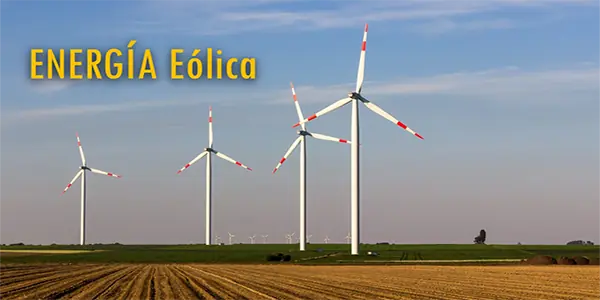
Wind energy harnesses the kinetic force of moving air to generate electricity, making it a cornerstone of cleaner, more sustainable power production.
The process relies on a wind turbine: rotor blades capture kinetic energy from the wind and convert it into mechanical energy, which a gearbox then steps up to the rotational speed required by an electrical generator. The result is grid-ready electricity with no combustion and no emissions at the point of generation.
Several factors have made wind energy one of the leading technologies for the energy transition:
- Minimal land disturbance — turbine foundations occupy a small footprint relative to their output
- No water-quality impact — the generation process does not alter water composition
- High electricity production potential at utility scale
- Sharply falling costs — levelized costs have dropped roughly 80% over the past two decades and continue to decline year on year
Solar Photovoltaic Energy
Solar photovoltaic (PV) energy converts sunlight directly into electricity. Photovoltaic panels are made of semiconductor cells that, when struck by solar radiation, generate a voltage differential. By wiring panels in series-parallel arrays, system designers can match output precisely to demand.
One of solar PV's defining strengths is scalability: modules can be added or removed as energy demand changes, without redesigning the existing installation. The technology is also fully recyclable — panel frames are aluminum, the glass surface is reusable, and the photovoltaic cells are made from silicon, a natural material. No component requires deep burial for decomposition; virtually nothing ends up as long-lived waste.
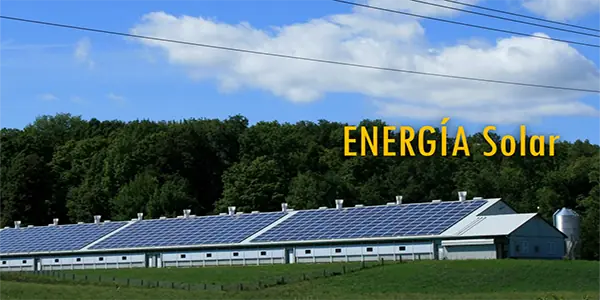 Photovoltaic panels convert solar radiation into electricity cleanly and at any scale.
Conclusion
The weight of renewables in the global energy mix is growing, and that momentum is not reversible. The urgency to accelerate this shift — to blunt the worst effects of climate change — continues to increase.
Achieving a genuine energy transition requires more than technology. It demands political will: strategic national planning backed by legislation that mandates sustainable systems and reduces dependence on imported fossil fuels. The economic case is clear too — less fuel imported means lower energy costs at the national level.
These changes do not happen overnight. They require clear roadmaps that hold their course over time. UN Sustainable Development Goal 7 — affordable and clean energy — provides a relevant framework, with its focus on deploying clean energy sources and improving efficiency through smart distribution grids.
The full transition calls for a complex integration of technology, skilled professionals, the public sector, private enterprise, and citizens — all working toward a shared goal. Studying and developing alternative generation sources is a logical and necessary first step.
Written by: Engineer Christian Urbaez curbaez@innotica.net
References
- Línea Verde Huelva — ¿Qué son las energías renovables?
- Rincón Educativo — Cómo funciona una central de biomasa
- Twenergy — El biogás, la energía renovable con mayor potencial en España y en Europa
- Ingeoexpert — ¿Qué es la energía solar fotovoltaica y cómo se genera?
- Twenergy — Ventajas de la energía eólica