

Smart and Sustainable Cities: Information and Communication Technologies
24 March 2021 by Lisgrett Bellorin
One definition of a Smart City, drawn from the document Master Plan on New Trends and ICT Infrastructure Development to Promote Smart City Construction [2], reads:
"A Smart Sustainable City is an innovative city that leverages Information and Communication Technologies (ICT) and other means to improve quality of life, the efficiency of urban operations and services, and competitiveness — while ensuring it meets the economic, social, and environmental needs of present and future generations."
A smart, sustainable city should not be seen as an unattainable ideal. It is better understood as a practical response to the demands of contemporary society — a framework for confronting real urban challenges head-on.
In this context, ICT plays a cross-cutting role: enabling social cohesion, environmental sustainability, and public safety across city systems.
 A vision of a smart city with integrated ICT infrastructure.
According to Alvarado (2018) [1], innovation, learning, and the creation and application of scientific and technological knowledge form a solid foundation for economic growth — for companies, countries, and regions alike.
The technological capabilities that drive innovation are the path to sustainable, cumulative competitive gains. They open markets for higher-value products and services, generate skilled and stable employment, and produce broader social benefits.
Smart cities will give citizens access to a wide range of services — higher quality, lower cost, and reduced environmental impact. Achieving that requires identifying the technologies that enable service convergence across fixed and mobile broadband networks: sensor networks, video surveillance systems, fiber-optic infrastructure, access technologies, and the applications that carry communications and data exchange between a city's various platforms.
Types of Sensors in a Smart City
Understanding the sensor landscape is a critical starting point for any smart city infrastructure. The following are some of the most fundamental sensor types and their specific applications:
| Sensor Type | Description |
|---|---|
| Parking sensors | Improve traffic flow by guiding drivers to available spaces, reducing time spent circling for parking. |
| Traffic sensors | Give citizens and public administrations real-time visibility into traffic conditions, incidents, and least-congested routes. They also support traffic signal management and the operation of barriers and drawbridges. |
| Light sensors | Detect dawn and dusk, or respond to overcast conditions, and regulate public street lighting accordingly — switching lights on or off based on available natural light. |
| Weather and pollution sensors | Environmental sensors monitor parameters such as air quality, water quality, noise levels, humidity, temperature, and pollen concentration. Pollution sensors measure additional variables, including CO₂ concentration and suspended particulate matter. |
| Waste collection and management sensors | Alert operators when bins are full and help plan collection routes based on actual demand, making waste management more efficient across the city. |
| Water and electricity consumption sensors | Communicate usage readings to a monitoring device, giving citizens greater awareness of their consumption and encouraging behavioral changes that contribute to energy savings. |
| Power grid sensors | Make the city's electrical grid genuinely intelligent — flagging network faults, reporting consumption data, and relaying weather conditions to anticipate and prevent failures caused by climatic events. |
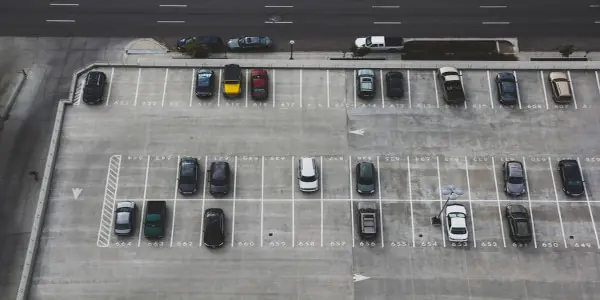 Sensor networks as an essential component of smart urban infrastructure.
Sensors are just one piece of the puzzle. A complete smart city infrastructure also requires careful analysis of network architecture, communication topologies, and cybersecurity — alongside solutions for monitoring and controlling systems in ways that genuinely improve service quality and meet the expectations of the people who live there.
References
- ALVARADO, Raúl. Smart Sustainable City: Toward a Model of Inclusive Innovation.
- MINISTRY OF COMMUNICATIONS OF PERU. Master Plan on New Trends and ICT Infrastructure Development to Promote Smart City Construction.
By: Lisgrett Bellorin — lbellorin@innotica.net — LinkedIn