

Sustainability in Smart City Planning
17 March 2021 by José Solano
According to the United Nations Development Programme (UNDP), just over half of the world's population currently lives in urban areas. That share is projected to reach 80% by 2050, driven by population growth, technological development, and the concentration of jobs and services in cities.
The picture inside those cities is uneven. Nearly 20% of urban residents live in marginal settlements, while cities as a whole consume roughly two-thirds of primary energy and generate close to 70% of global CO₂-equivalent emissions [1].
In developing economies, cities are the epicenter of many socioeconomic and public-health challenges — challenges the COVID-19 pandemic made sharper. They are also the site of the greatest opportunities for an inclusive and accessible future, one where the central goal must be closing the gap in socioeconomic inequality.
That is why any serious conversation about smart cities has to start with the UN Sustainable Development Goals: SDG 8 (reducing inequality within and among countries), SDG 9 (fostering innovation), and SDG 11 of the 2030 Agenda, whose core objective is "to make cities and human settlements inclusive, safe, resilient and sustainable" [2] — including "investing in public transportation, creating green public spaces, and improving urban planning and management in a way that is participatory and inclusive" [1].
Smart Cities and Sustainability
A smart city is not automatically a sustainable city, and vice versa. Smart cities are a transformation pathway toward sustainability — not the destination itself.
The smart label implies an optimal use of technology to manage a city's critical variables efficiently: resources such as energy and drinking water, and services such as lighting, waste collection, and public transit. For that to matter, implementation must genuinely improve quality of life across all sectors of society — otherwise the "smart" label is just marketing.
It is also worth remembering what makes a system or device truly "intelligent": decision-making driven by data. Without recorded data, that intelligence has nothing to work with.
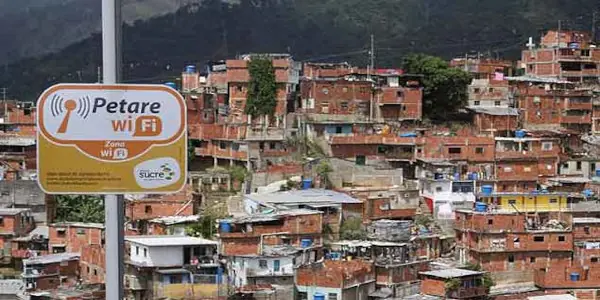 Sustainable urban planning integrates technology, mobility, and efficient resource management.
The New Urban Agenda as a Roadmap
The UN Human Settlements Programme, UN-Habitat [3], established the New Urban Agenda (2016) as the guiding framework for achieving sustainability at the level of urban settlements. Its "Implementation Plan" for resilient and environmentally sustainable urban development states in paragraph 66:
"We commit ourselves to adopting a smart-city approach that makes use of opportunities from digitalization, clean energy and technologies, as well as innovative transport technologies, thereby providing options for inhabitants to make more environmentally friendly choices and boosting sustainable economic growth, and enabling cities to improve their service delivery."
Translating that commitment into practice depends entirely on the political will of policymakers.
Urban planning generally works top-down: from macro-level instruments — national and regional policies, land-use legislation, and master plans — down to local tools such as municipal development plans, resolutions, and ordinances. The guidelines and action plans derived from the New Urban Agenda need to be embedded at every level of that hierarchy, both for rehabilitating existing urban areas and for designing the cities of the future.
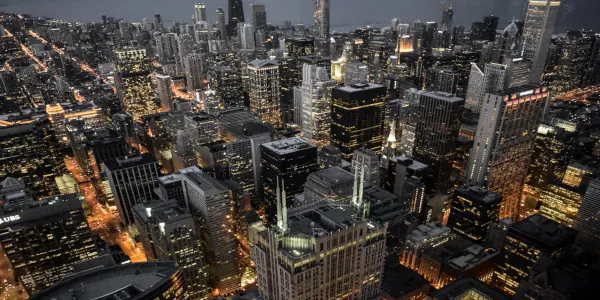 Sensors and digital platforms generate the data that feeds urban decision-making.
The Role of Civil Society and the Private Sector
The push toward smart cities cannot wait for government alone. Civil society, NGOs, and the private sector all have a role — and room to move now.
Initiatives such as deploying remote sensors, smart meters, interface platforms, and open datasets for citizens and municipalities are foundational. They do two things at once: generate the information that strategic planning depends on, and harness the digital era in telecommunications to democratize access to these solutions.
There is a great deal of work ahead, but the window of opportunity is equally wide. Collaboration among the key actors — private enterprise, civil society (NGOs and academia), and local government — is essential to building a shared vision around an R&D+I+S strategy (research + development + innovation + sustainability). That is the combination most likely to translate the smart, sustainable city model into a real reduction in socioeconomic inequality.
References
- UNDP — SDG 11: Sustainable Cities and Communities
- United Nations. 2018. The 2030 Agenda and the Sustainable Development Goals: An Opportunity for Latin America and the Caribbean (LC/G.2681-P/Rev.3), Santiago.
- UN-Habitat — The New Urban Agenda
Engineer José Solano — jsolano@innotica.net — LinkedIn