
Reflections on Smart Cities and Urban Governance
10 March 2021 by Jonny Cabrera
Sometimes I stand on my balcony and think about the sheer number of people living in this city — and about the problems we all share as residents. Not everyone has reliable access to basic services: electricity, water, gas. Not because the infrastructure is missing, but because the service itself fails.
For many people, daily life is simply about getting through the day. And that is devastating for any society. Your mind stops reaching for anything productive; survival crowds everything else out. You lose heart. That is the new face of oppression — one that suffocates the mind, prevents clear thinking, and gradually makes abnormal conditions feel normal. Quality of life erodes.
Against this bleak backdrop — more common than it appears across many regions of the world — it is easy to question why anyone talks about smart cities, why dream of something that feels utopian. As a society, perhaps we still need to grow before we can aspire to real change. Or perhaps we simply need to meet our most basic needs before taking any step beyond.
I try to see multiple perspectives at once before forming an answer. Honestly, it is a difficult exercise. I experience these problems directly — through family, friends, neighbors — yet at some point I chose to invest my energy in a space that works toward shared benefit for everyone.
That means pursuing sustainability in construction, optimizing building systems, and automating wherever possible so that we have first-hand data to drive better decisions.
That perspective — optimistic, yes — is what allows all these incremental efforts to connect and compound over time. A documentary I once saw about entrepreneurs operating in countries at war permanently changed how I view my own situation.
Even under the most hostile conditions imaginable, there are people who keep betting, keep working, keep thinking and building. They refuse to give up, because doing so would mean accepting the status quo. Staying active, staying prepared, and readying themselves for reconstruction — that is what gives them hope.
Which brings us to the obvious question: what does any of this have to do with smart cities? Quite a lot, actually. Identifying and acknowledging your problems is only the first step. Truly understanding what a smart city means — a concept that goes far beyond technology — is the second.
Once you do that, you can map out needs, prioritize them, and establish a real starting point from which to demonstrate that change is possible. Archimedes once said: "Give me a lever long enough and a fulcrum on which to place it, and I shall move the world." Our fulcrum is the collective recognition that the way many of us live is not normal.
Corrupt officials — not normal. Paying for public services that don't work — not normal. Persistent insecurity — not normal. Needing to hire a fixer just to complete a routine government transaction — not normal. Everyone can build their own version of this list. The exercise is worth doing.
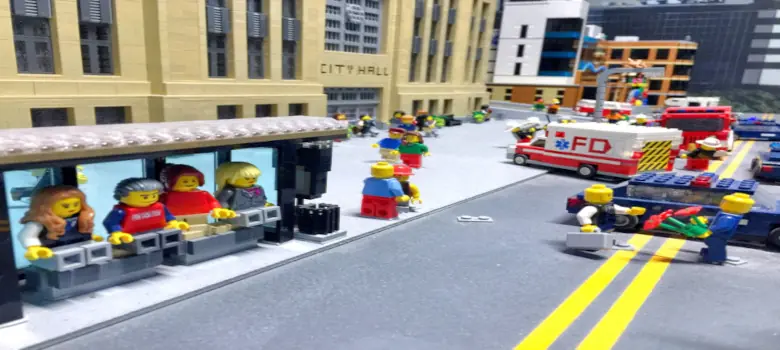
 Smart cities: transforming urban governance starts with recognizing what is not normal.
When enough of us internalize this, we will understand that positive change is possible. We will start to appreciate the quiet, persistent work that individuals and institutions have been doing from many different angles — some visible, many not.
Gathering data on a failing public service and documenting its shortcomings systematically carries the same weight as convincing a developer or a mayor that sustainable construction matters. Both are pursuing efficiency in their domain. If we consume fewer resources, the challenge stops being "how do we generate more" and becomes "how do we cover demand with what we already have" — which is what real efficiency looks like.
The Value of Information in Urban Governance
Data is the foundation of effective governance. Collecting it can be as straightforward as running a survey, or as sophisticated as deploying sensors that transmit readings directly to a dedicated platform.
The approach depends on available resources, investment access, and commitment to the cause. What is not negotiable is this: without information, efficient governance is not possible.
Transparency, Communication, and Trust
Closely tied to data is transparency. Smart cities ensure that every process is open to scrutiny — from public tenders and financial disclosures to the datasets being collected for any given purpose.
What matters is having a real accountable authority: someone who can be held responsible for the decisions being made. This is one of the most effective ways to rebuild the public trust that has been lost — and trust is essential if a city wants to pursue genuine transformation.
Citizens, the private sector, and public institutions must work together to make up for lost time and move toward the near future we all want.
Populist or electorally driven thinking will only dig the hole deeper. The idea that raising a service tariff will cost votes is outdated. Recent surveys show that people are willing to pay — provided services actually improve. That is entirely logical.
If you hold a decision-making role in urban governance, take a moment to answer a few questions honestly:
- Do I understand the real problems facing the community I represent?
- What are their priorities?
- Does the community genuinely believe we are working for them?
- Am I transparent in my management and accountable for what I do?
- What is my concrete plan to improve quality of life in the short and medium term?
- What are my early wins?
- Do I treat data and information as the decision-making tools they actually are?
The list could go on. But the exercise is worth doing.
 Citizen participation and accountability are foundational pillars of any smart city.
There are people out there doing remarkable work. Not all of them are recognized for it, nor do they need to be — but every contribution counts. If we set aside our egos, we would almost certainly accomplish even more.
Private-sector involvement in urban development is critical — not only because it is a business opportunity, but because the commercial activities companies pursue have an impact that extends well beyond economics. Done well, they improve people's quality of life.
A company winning a contract to improve road infrastructure should be cause for celebration. But there should also be pride in doing the job right, without shortcuts — without skimping on materials to come in under the tendered budget. For a community, that integrity is worth more than it might seem.
I will explore the role of technology in urban development in a future post. This time, I wanted to reflect on something more foundational: the importance of changing our mindset, staying mentally active, taking ownership of what we do, and finding purpose in working toward solutions to the problems that affect us all. That, too, is what smart cities are about — improving quality of life for everyone, driven by a collective shift in how we think.
Jonny Cabrera jcabrera@innotica.net · LinkedIn
This blog is an opinion and outreach publication. The views expressed in this article are solely those of the author and do not necessarily represent the position of the company.