

Public and Private Sectors: We Are All Responsible for Sustainable, Smart Cities
3 March 2021 by Carlos Dobobuto
We like to think of ourselves as victims rather than participants. Every problem in our cities gets blamed on someone in the other sector — the public sector blames private developers, and private developers blame the government. Having led infrastructure design, construction, and operations projects from Spain across Latin America, and from Venezuela to at least three other countries in the region, I feel compelled to offer a perspective that might challenge the comfortable routine most developers, builders, and public officials have settled into.
These actors often present themselves as agents of change — and by change I mean not just the exhausted political kind, but cultural, ethical, economic, and technical change. Yet when the moment comes to prove it, that commitment turns out to be something they demand of the other side. Meanwhile, the real losers are transparency, civic culture, respect for citizens, and above all, the future — which grows more compromised by the day.
There Are Always Opportunities
Clear rules of the game matter enormously, and the responsibility of those who govern — regardless of political stripe — is real. But rather than dwelling on that, let's spend the time mapping a path forward that holds regardless of the political environment.
A friend once observed that even during a war, economic, productive, and social activity must go on. That's exactly right. We are obligated to keep building — but every project is a chance to do it differently, to do it better. Each one is a rare opportunity to model the change we so readily demand from others.
Profitability as a Core Objective in Construction
Designing, building, and operating infrastructure is a business. Like any business, it must generate attractive economic returns and improve the quality of life of its clients — owners and end users alike — without depleting the shared resources of the city.
Construction must produce economic, social, and environmental returns. Most developers and builders are convinced of the first two; the third — environmental benefit — rarely makes it onto their priority list.
We cannot keep building infrastructure while landfills, waterways, and city streets absorb the consequences. Every new project must define concrete measures to maximize economic returns, social benefit, and environmental stewardship at the same time.
Most players in construction understand the need to be profitable. Fewer realize that sustainability is not optional — it is the only viable path forward. The majority still see sustainability as something championed by idealists who want a world full of "green" products without regard for cost or for the real interests of developers and builders.
Worth stating clearly: sustainability means meeting the needs of the present without compromising the ability of future generations to meet their own — balancing economic growth, environmental care, and social well-being. It comes down to people, profit, and planet. A useful mnemonic, and a genuine framework for how to operate.
Sustainability is not aspirational — it is where we have to go. Technology plays a central role in getting there, and life-cycle analysis must drive project decisions.
We cannot keep burning budget on avoidable problems. A telling public-sector example: expensive public lighting projects specified with cheap fixtures and no technology to support maintenance. On the private side: luxury buildings where energy efficiency is an afterthought, HVAC systems are routinely oversized, and operational continuity depends on diesel generators running on fuel that keeps getting more expensive and harder to source.
The current landscape — and the realities of our region — make the case for immediate action. The destination must be cities that are genuinely sustainable and smart, where quality of life for citizens is always the primary metric.
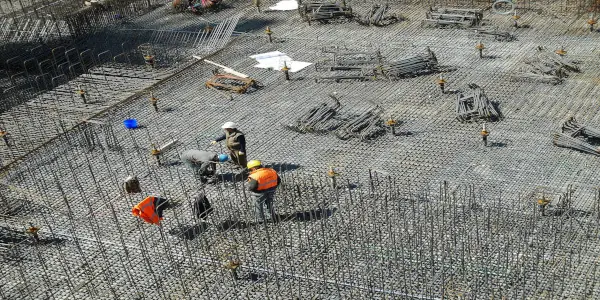 The path to sustainable, smart cities requires commitment from every actor involved.
First Steps for the Private Sector
Education is always the most important starting point for achieving design, construction, and operations where sustainability is the primary goal and technology is a core tool. That said, here are concrete actions any private developer or builder can take now:
-
Require the general contractor to design and implement a construction impact prevention and mitigation plan, drawing on the EPA's 2012 Construction General Permit (CGP) guidelines. This applies from demolition and site preparation through project completion. Document every step and promote a circular economy approach to waste and materials management.
-
Require the general contractor to develop and execute an indoor air quality (IAQ) management plan, in compliance with applicable local occupational health and safety regulations. The ANSI/SMACNA 008-2008 IAQ Guidelines for Occupied Buildings Under Construction (2nd ed., 2007) is a solid reference.
-
Require the architect and general contractor to design site infrastructure that allows rainwater to permeate the ground, reducing runoff volume and improving water quality — replicating the site's natural hydrology and water balance as closely as possible.
-
Require the architecture firm to specify envelope materials whose U-value (Thermal Transmittance) and SHGC (Solar Heat Gain Coefficient) meet or exceed ANSI/ASHRAE/IES Standard 90.1–2010, including its window-to-wall ratio guidelines.
-
Document requirements to all MEP designers — HVAC, lighting, energy, and controls — that their designs comply with ANSI/ASHRAE/IES Standard 90.1-2010 or later.
-
Require the HVAC designer to align the system design with ASHRAE 90.1-2010, ventilation with ANSI/ASHRAE/IES Standard 62.1-2010, and thermal comfort conditions with ANSI/ASHRAE Standard 55–2010, Thermal Environmental Conditions for Human Occupancy.
-
Specify native or locally adapted plant species in the landscaping design — ideally species that can thrive on natural rainfall without a dedicated irrigation system.
-
Require the plumbing designer to target reduced dependence on the public water supply: strategies should include rainwater harvesting, groundwater use where feasible, and greywater recovery for toilet flushing. Water-efficient fixtures are a baseline requirement throughout.
-
Incorporate renewable energy — at a minimum for direct on-site consumption — targeting at least 1% of total projected energy demand, with 10% as the aspirational goal.
-
Require the architect to allocate dedicated spaces and develop a strategy that actively promotes recycling throughout the facility.
-
Require the project manager to adopt an integrative project delivery methodology — one that brings all team members, including the owner, into the process from the start — so the design meets its sustainability targets within each specialty's allocated budget. Budget transparency across the team is non-negotiable.
First Steps for the Public Sector
Budget is the perennial constraint in any public institution. City governments, ministries, and regional authorities will always say they lack the resources to pursue smart and sustainable city initiatives — especially when public servants are as underpaid as they are today in much of the region.
Even so, every leader of a public institution should designate a single person responsible for promoting sustainability and technology in the city's infrastructure programs. The first step is always education. Beyond that, here are concrete recommendations:
-
Establish a dedicated coordination unit or division responsible for promoting sustainability and technology across all infrastructure projects the public organization designs, builds, and operates.
-
The public-sector team must bring the private sector into this commitment — creating economic incentives, public recognition, and streamlined permitting for companies that deliver projects where sustainability and innovation are genuine priorities. Strong examples already exist in Colombia, Peru, El Salvador, Costa Rica, and Chile, among others.
-
Define minimum sustainability requirements — covering water, energy, waste management, indoor air quality, and technology — for all infrastructure under the organization's jurisdiction. The member countries of the World Green Building Council offer concrete benchmarks worth studying.
-
Develop and promote public-private partnership (PPP) frameworks that enable projects improving citizens' quality of life, creating opportunities for private investors while respecting private property rights and contractual commitments on all sides.
 Collaboration between sectors is essential to building more sustainable cities.
Conclusions
Designing, building, and operating infrastructure without clear sustainability and technology targets is working against your own interests. The traditional operating model for our cities has run its course.
The pandemic made vivid just how much our built environments matter — and how urgently we need quality public services. Now more than ever, the situation demands thinking differently and taking steps toward what is, in any case, inevitable. As a wise friend once put it: you cannot postpone the inevitable.
Change is everyone's responsibility — not something to wait for from a government mandate. We each already know what we need to do.
We recognize the initiatives already advancing this agenda in Venezuela: the BIM Forum Venezuela, the Directorate of Innovation, Technology, and Sustainable Construction of the Venezuelan Chamber of Construction, the chambers of commerce and industry active in the country, and especially the Venezuelan Green Building Council, which has recently joined the World Green Building Council.
Engineer Carlos Dobobuto cdobobuto@innotica.net linkedin.com/in/carlosdobobuto-innotica