
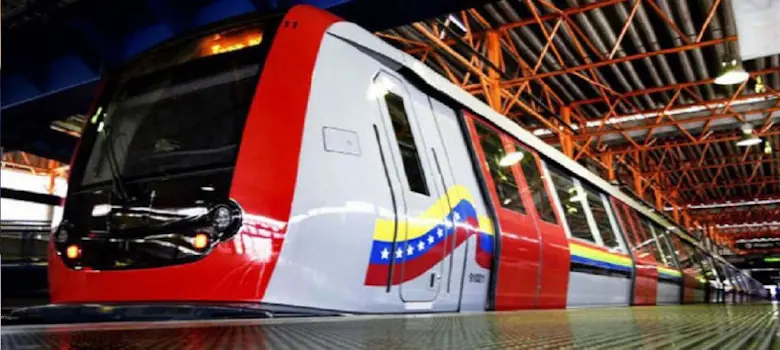
Sustainable Mobility and the Energy Transition
15 July 2020 by José Solano
Introduction
The IPCC's Fifth Assessment Report (IPCC, 2014) found that the transport sector accounts for 14% of global greenhouse gas (GHG) emissions, measured in CO₂-equivalent tonnes. Road transport alone is responsible for 72% of those CO₂-eq emissions [8].
Global warming is one of the driving forces behind the energy transition — the shift from fossil fuels to cleaner energy sources — as a pathway to reducing worldwide CO₂ emissions. That transition applies directly to transport.
Sustainable transport and mobility connect directly to Sustainable Development Goal (SDG) 11: Sustainable Cities and Communities, and specifically to Target 11.2: "…provide access to safe, affordable, accessible and sustainable transport systems for all…" (UN, 2018) [6].
Sustainable transport must provide accessibility for everyone and meet daily mobility needs while remaining compatible with human health and ecosystem integrity — all while limiting GHG emissions. Achieving this requires urban strategies that are explicitly designed around the economic realities facing much of the population, including widespread poverty.
A real paradox can emerge here: in pursuit of emissions-reduction commitments, renewable-energy-based motorized transport may become financially out of reach for a significant share of the population.
Renewable Energy in Public Transport
More than 50% of the world's population now lives in urban areas, according to the World Bank. Those cities generate over 80% of global GDP — and with it, consume two-thirds of global energy and produce 70% of GHG emissions [2].
Against that backdrop, the IPCC's Special Report on 1.5°C — part of its Sixth Assessment cycle — stresses that rapid changes in electricity generation, transport, and industry are needed to limit warming to 1.5°C. The target: a 45% reduction in CO₂ emissions relative to 2010 levels by 2030 [5].
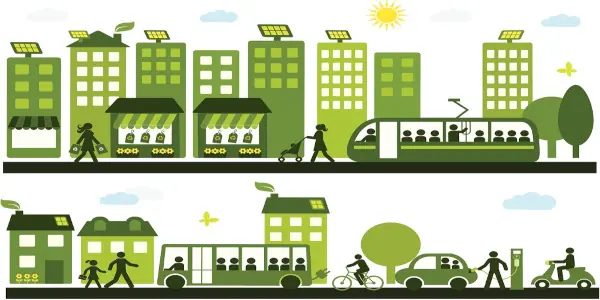 Sustainable urban mobility: electric transport as an alternative to fossil fuels.
Ge, Lebling, Levin & Friedrich (2019) of the World Resources Institute (WRI) add that, to trigger a meaningful inflection point in current climate trends by 2020, electric vehicle sales in the transport sector would need to reach 15–20% of the market — up from just 1.4% at the time, with a projected 3% for 2020 [3].
They also argue that public transport should double its share of urban mobility relative to private vehicles: fewer people driving, more people using collective transport. As a reference point, public transport accounted for 57% of all trips made in Caracas in 2016 [10].
Every efficiency gain in energy generation, every reduction in pollution and CO₂ emissions from this sector, contributes meaningfully to climate change mitigation and to healthier cities.
Initiatives are already underway globally — and increasingly in Latin America, including Colombia, Uruguay, and Peru — to deploy electric bus fleets as a response to these social and environmental challenges. Affordability, however, remains an open question.
Affordability of Urban Transport
The Inter-American Development Bank (IDB, 2019) notes that public transport subsidies have been a common approach in Latin America to improve affordability — either on the demand side (direct subsidies to users) or the supply side (subsidies to service providers) [7].
A review of the available literature makes one conclusion clear: subsidies targeted at lower-income populations are unavoidable if the goal is a genuinely affordable transport system. Countries with the most advanced sustainable transport systems — the Scandinavian nations (Denmark, Norway, Sweden) — subsidize fare costs at rates above 50% [9].
Luxembourg went further, implementing 100% fare subsidies across trains, trams, and buses in 2019, while simultaneously raising taxes on fossil fuels [1].
In Latin America, Vasconcellos (2019) reports that monthly public transport costs place a heavy burden on most users, averaging 10.7% of the minimum wage — equivalent to roughly US$0.30 per trip [11].
Providing high-quality, environmentally sustainable public transport inherently comes with higher operating costs. A significant portion of the population will simply not be able to cover those costs unaided, which means subsidies are not optional — they are structural.
That said, subsidies are not free. They require wealth generation to fund them, and that in turn requires political will, sound governance, and transparent management.
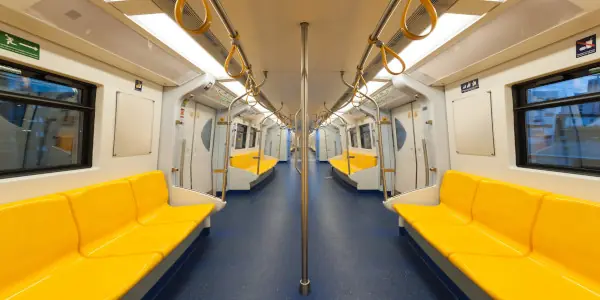 Affordable public transport is a cornerstone of social equity in Latin American cities.
Strategies for Sustainable Urban Mobility in Venezuela
Achieving sustainable urban mobility within an energy transition framework calls for strategies tailored to each country's socioeconomic realities — strategies that make urban transport genuinely affordable and accessible to most or all of the population who depend on it.
Drawing on the analysis above, several strategies stand out as applicable to Venezuela. They fall into four interrelated categories:
- Comprehensive policy
- Legal and regulatory framework
- Technological development
- Financing mechanisms
The starting point is institutional recovery: building the capacity to formulate integrated policies covering transport, the economy, and energy — policies that regulate subsidies while creating space and incentives for clean technology adoption. Restoring the reliability and quality of the electricity supply is a prerequisite for everything else.
More specifically, Venezuela's hydroelectric potential — which is substantial — could power existing systems such as the Caracas Metro. In parallel, an updated legal and regulatory framework is needed to support and implement urban transport plans at both national and municipal levels, filling significant gaps in current legislation.
On the technology side, the near-term priority for energy savings and GHG reduction should be improving the energy efficiency of existing public transport fleets. This can run in parallel with longer-term development of clean energy technologies, pursued in partnership with academic institutions and international cooperation, and adapted to local demand conditions.
Finally, all of the above requires dedicated financing: capital investment funds, subsidy coverage mechanisms, taxes on fossil fuels, and public-private partnerships.
These strategies must be accompanied by education in urban sustainability and investment in institutional, academic, technological, and — above all — civic capacity. Building that capacity is what enables genuine partnerships and a trajectory toward more sustainable urban life.
Written by: Engineer José Solano jasolanopds19@gmail.com linkedin.com/in/jasolanop
References
- Auxenfants, M. (2019). El pequeño país de Europa donde el transporte público será gratis. BBC Mundo.
- World Bank (2019). Urban Development: Overview.
- Ge, M.; Lebling, K.; Levin, K.; & Friedrich, J. (2019). Tracking Progress of the 2020 Climate Turning Point. Working Paper. Washington, DC: World Resources Institute.
- Intergovernmental Panel on Climate Change (2014). Climate Change 2014: Synthesis Report. Geneva, Switzerland: IPCC.
- Intergovernmental Panel on Climate Change (2018). Summary for Policymakers. In: Global Warming of 1.5°C. An IPCC Special Report. Geneva, Switzerland: WMO.
- United Nations (2018). The 2030 Agenda and the Sustainable Development Goals: An Opportunity for Latin America and the Caribbean (LC/G.2681-P/Rev.3). Santiago, Chile.
- Rivas, M.; Serebrisky, T. & Suárez-Alemán, A. (2019). How Affordable Is Transportation in Latin America and the Caribbean? Technical Note No. IDB-TN-1588. Inter-American Development Bank (IDB).
- Sims, R.; Schaeffer, R.; Creutzig, F.; Cruz-Núñez, X.; D'Agosto, M.; Dimitriu, D. … & Tiwari, G. (2014). Transport. In: Climate Change 2014: Mitigation of Climate Change. Cambridge, UK and New York, NY: Cambridge University Press.
- Urban Transport Group (2017). The Scandinavian Way to Better Public Transport. Transport Research Institute, Edinburgh Napier University. Edinburgh, Scotland.
- Vasconcellos, E. & Mendonça, A. (2016). Urban Mobility Observatory: Final Report 2015–2016. Draft Summary. CAF – Development Bank of Latin America.
- Vasconcellos, E. (2019). Contributions to a Big Push for Sustainability in Latin America and the Caribbean: Sustainable Urban Mobility. Project Documents (LC/TS.2019/2). Santiago, Chile: ECLAC.