

Telemetry Systems for Urban Alert Management
21 April 2021 by Sergio Durán
Cities worldwide are struggling to manage their resources efficiently. As populations grow exponentially, delivering basic services across dense, sprawling urban areas has become a genuine engineering challenge.
Concentrating millions of people into limited space puts direct pressure on quality of life. Rising unemployment, resource scarcity, and the cost of services are among the most persistent symptoms.
These pressures gave rise to the smart city concept — the idea that cities can be made economically, socially, and environmentally sustainable through deliberate design and technology.
Smart cities use information and communication technologies (ICT) to improve performance in the areas that matter most: transport, education, health, energy, and infrastructure [2].
Without reliable information, processes slow down, non-renewable resources are wasted, and pollution grows. Information is therefore the most critical input for managing, maintaining, and expanding urban systems — and that requires an architecture capable of describing how those systems actually behave.
Telemetry and the Internet of Things (IoT) are the technologies most commonly deployed to build that architecture.
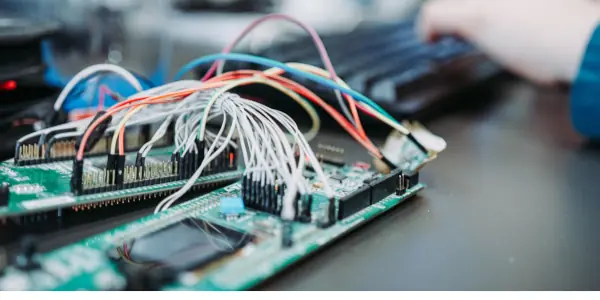 Urban telemetry infrastructure for real-time service monitoring.
What Telemetry Is and How It Works
Telemetry refers to electronic systems that measure, record, and transmit physical quantities from a remote location. The primary purpose is to deliver real-time data to a control center for collection and subsequent analysis.
Every telemetry system rests on four core components:
-
Measurement captures data from the source using one or more sensors. Typically, this is an embedded board with a microcontroller that supports multiple hardware inputs and sensor interfaces. The embedded system normalizes readings into standard units for downstream processing. In recent years, new microcontrollers have arrived each year that are cheaper, more powerful, smaller, and open-source — making it progressively easier to build telemetric measurement devices.
-
Communication covers the channels through which data travels to the control center. Common media include satellite, GSM, mobile data, Ethernet, Wi-Fi, radio frequency, and LoRa, among others. Open communication channels introduce security risks: it is necessary to authenticate sampling devices and reject false data sources. Given the limited processing capacity of most microcontrollers, encryption techniques are often constrained by budget.
-
Analysis is the processing layer that converts raw device readings into human-readable information, flags measurements that exceed defined thresholds, and recommends corrective actions when anomalies appear.
-
Visualization is where operators monitor remote variables in real time — including abnormal-reading alarms and device fault notifications.
In many deployments, the same communication channels are reused to send control commands back to the remote site. This bidirectional capability makes telemetry systems adaptable to a wide range of applications.
The most common use cases include monitoring liquid levels in tanks, tracking vehicle fleet locations, detecting toxic gases, and operating weather stations.
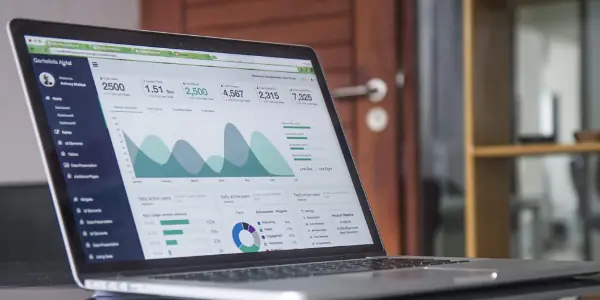 Telemetry applied to transport fleet tracking and management.
Real-World Telematics Applications
Companies and government agencies that have deployed telemetric systems consistently report measurable resource savings. Two cases illustrate the breadth of the technology.
Sitrack, a fleet-tracking specialist, reports that "55% of companies using telemetry have benefited from fuel savings, 31% have reduced maintenance costs, and 39% have cut journey times through route optimization" [4].
Mexico's National Commission for the Efficient Use of Energy (CONUEE) describes the outcome of a mobility and transport telemetry initiative: "The information obtained makes it possible to reduce energy consumption by making the flow of people and goods faster and more efficient, while improving the quality of life of residents by offering a city with fewer uncertainties" [1].
Applying Telemetry to Urban Management
Scaling telemetry to a city level opens up a striking range of capabilities — all potentially managed from a single control center, perhaps housed within a city authority.
From that center, operators could detect water leaks anywhere in the distribution network, identify early contamination in reservoirs or springs, detect gas leaks, relay fire alerts directly to emergency services, monitor pollution levels near waste disposal sites, and notify residents and law enforcement of security incidents in real time.
Turning that vision into practice requires careful planning of how data will be collected across the city. Unlike the point applications above, city-scale data arrives in overwhelming volumes — big data — which poses significant challenges for storage and analysis.
One approach is to design separate telemetry systems for each critical service, segmenting data by service type and geographic zone. This limits data volumes but multiplies the number of control centers needed to supervise all the resulting alarms.
An alternative is to distribute telemetric devices across all services and report to a single control center equipped with a server capable of ingesting the full data stream. With AI-assisted processing, that architecture can surface patterns that meaningfully improve decision-making in urban management.
Smart Cities Already in Operation
The smart city concept can sound aspirational, but several cities are already recognized as functional examples. Kosowatz (2020) identifies ten leading smart cities: Singapore, Dubai, Oslo, Copenhagen, Boston, Amsterdam, New York, London, Barcelona, and Hong Kong [3].
Beyond sensor networks, these cities integrate social media feeds to gauge city conditions and resident needs in near real time. Many also maintain high-detail 3D city models that allow planners to simulate and optimize urban expansion before breaking ground.
To explore these topics further, you can enroll in the Smart Cities — Present and Future and Sustainable Development for Urban Management courses on the Campus Innotica portal.
Sergio Durán — sduran@innotica.net — LinkedIn