
The Power of Proximity and Automation in Times of Change
1 July 2020 by Eduardo García Martín
The First Law of Geography
"All things are related, but nearby things are more related than distant things." — Aldo R. Tobler
This law establishes a general principle: regions are not isolated units. They are interconnected, and economic ups and downs transfer between neighbors.
The proximity this law refers to is grounded in georeferencing. But proximity isn't only a geographic relationship — it can also be understood as a relationship of affinity.
The Second Law of Geography
"The phenomenon external to an area of interest affects what goes on inside."
In 2017, Foresman and Luscombe proposed a second law of geography, derived from the digital era and economic geography [1]:
"Things that know where they are can act on their locational knowledge. Spatially enabled things have increased financial and functional utility."
Uber is a clear illustration of this principle. The service succeeds precisely because proximity to the mobility market is unlocked by spatial enablement and location awareness. True democratization means that the driver — not just Uber — also benefits from that enablement. Smart cities should foster exactly this: bottom-up solutions that put spatial intelligence in the hands of citizens.
In the age of digital economies, a new research frontier is taking shape where everything is more connected to everything else, and spatially enabled technology commands higher economic value. This spatial enablement of digital information gives specialists a new understanding of markets within a "Digital Earth" framework [4].
As the Internet of Things matures, location and its economic value will only grow in importance. New business models are entering and reshaping established markets with spatially enabled approaches. The second law of geography offers a conceptual framework for understanding the economic potential of spatially enabled information.
Food and Its Emerging Trends
"A growing number of consumers are actively moving away from mass-produced food that has traveled hundreds of kilometers. Instead, they seek locally sourced offerings that let them know more about where products come from, how they are produced, and what impact they have on the environment and regional economies." [10]
Automation and the Reshoring of the Textile Industry — Fashion 4.0
Producing closer to the market increases speed and flexibility, and that translates directly into commercial value. When you factor that additional value into the financial picture, the case for advanced manufacturing technologies — automation — at local or near-shore origins becomes even stronger. Large Asian textile operations were historically justified by low cost alone.
A study by McKinsey in collaboration with the Institut für Textiltechnik analyzed per-unit production costs in Asia [14]. The report found that with just a five-percentage-point increase in sales driven by local or near-shore production, reshoring from China — or even Bangladesh — to an automated factory in Mexico or the United States becomes economically viable.
Within five years, semi-automated factories could be enabling near-shore manufacturing projects and generating new business models, such as the in-store factory.
The fashion industry can already bring a new design to market in twenty days as standard practice. With proximity suppliers, that window can be forced down to ten. With digitalization, why not twenty-four hours? With 3D printers, right in the store, why not fifteen minutes? Experts agree it's coming — the only question is when.
Impact on the New Normal
How can the tourism market leverage proximity in the short term?
"In the coming months, proximity travel will be the growth engine. Agencies are invited to rethink their positioning, products, and services — focusing on younger audiences rather than senior travelers, and targeting proximity markets." [7]
The data needs to be turned inside out. That means measuring, learning, and acting — then repeating the cycle to understand what this target segment actually needs.
Recommendations
"In the immediate term, tourism agencies are invited to rethink their positioning, products, and services, focusing on younger audiences and proximity markets." [7]
Proximity Products: The Trend About to Explode
What happened to local food in today's global market?
"British consultancy GlobalData indicates that 70% of consumers associate local or proximity products with fresher goods, and 62% believe those products support the local economy." [8]
The Challenge
"Consumers around the world have begun embracing the trend of buying food marketed as 'local' or 'nearby.' They want to know where what they eat comes from, how it was made, and who made it. Proximity products are generally perceived as higher quality, more sustainable, and better tasting than mass-produced alternatives." [8]
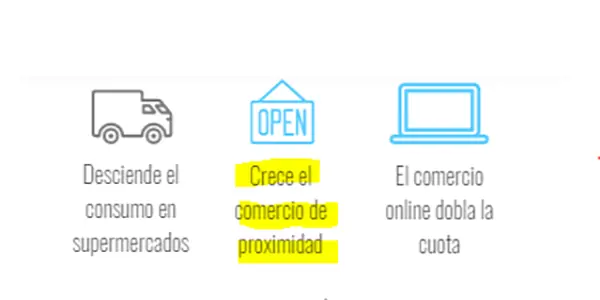 Consumer trends in local and proximity products.
China — the first country to enter a de-escalation phase — offers the clearest early signal of post-lockdown consumer behavior. Sixty percent of Chinese consumers called for a push in online commerce and home delivery, 53% wanted expanded health offerings on shelves, and four in ten demanded stronger fresh-food availability [12].
From the market's perspective — especially for distributors — this translates into building a more agile and digital supply chain, accelerating omnichannel capabilities, and responding to new demand for proximity products. Automation will play a central role here.
A report from European firm Capgemini argues that retailers must focus on strengthening last-mile delivery — making it both robust and agile — and suggests several lines of action [12]:
- Build deeper partnerships with delivery ecosystems.
- Adopt more flexible workforce models that allow real-time responses to supply and demand fluctuations.
- Open more delivery windows and introduce new delivery formats.
- Improve the user experience through personalization and more sophisticated voice assistants.
The report also urges retailers to invest in in-store automation: reorganizing store layouts to support social distancing, deploying mobile self-service and self-checkout systems, and scaling digital, contactless payment services.
COVID-19 restrictions pushed many consumers to shop at retailers they'd never used before — simply because of proximity. The result was brand disloyalty on a significant scale, and brands now need to rebuild those relationships.
Retailers must rely on a trusted supply chain to maintain product availability, and they must learn how to shift from national distribution networks to more localized ones — gaining agility and speed across the entire chain.
Neighborhood Kitchens — Virtual Kitchens
"We can deploy mobile kitchens in our parking lots," allowing Reef to target select urban neighborhoods within a given market, bringing food closer to consumers and cutting delivery time. "Our proximity is another advantage." [15]
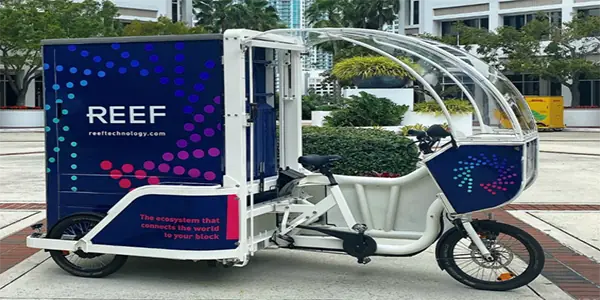 Reef Kitchens operates virtual kitchens out of parking structures across North America.
Reef Kitchens is part of Reef Technology, which rebranded in June 2019 from ParkJockey following substantial investment. The company owns approximately 5,000 parking lots across North America, and those lots and garages are the engine behind Reef's expansion strategy.
Reef's data advantage — drawn from its technology arm and from the consumers who use its facilities — also drives decisions about which restaurant concepts to offer on its platform. "We have extensive analytics to determine what consumers in a local market are demanding."
Reef operates out of trailers — large kitchen rigs parked in its lots — with each trailer preparing food for four to six different brands. The company holds master service agreements with major third-party delivery services: Uber Eats, DoorDash, Grubhub, and Postmates.
"In this era of social distancing, consumers are gravitating toward delivery and minimal-contact options more than ever." [15]
The delivery-only virtual restaurant trend was already growing before the pandemic. COVID-19 "really accelerated that trend" as more consumers sought contactless ways to get their meals.
This is AI — and specifically GeoAI — at work: combined with real-time demand intelligence, it transforms underutilized parking structures into hubs for virtual kitchens.
Reformulating the Two Laws
To close, I'd like to restate the two laws of geography through a business lens:
First Law (reformulated): All businesses are related, but businesses that are closer together are more related.
Second Law (reformulated):
"Businesses that know where to locate themselves can act on their locational knowledge and their understanding of demand. Spatially enabled businesses have increased their financial and functional utility."
The first law shows how businesses — technology companies, restaurants, mobility services — are drawing closer and becoming more interconnected. Empowered by the second law — by knowing where to be and how to meet demand — they amplify proximity markets and adapt to a new normal that ultimately increases both their financial and functional value.
Eduardo García — Commercial Advisor egarcia@innotica.net · LinkedIn
References
- The second law of geography for a spatially enabled economy
- Tim Foresman — Taylor & Francis
- Ruth Luscombe — Taylor & Francis
- International Journal of Digital Earth
- Volume 10, 2017 – Issue 10
- Tobler, First Law of Geography
- Young audiences and proximity markets — keys for travel agencies
- Proximity products: the trend about to explode
- The challenge of aligning data analysis with business models — Hosteltur
- The new consumer trend of 2020: the importance of local products
- Proximity tourism and non-mass experiences will be the trend
- Retail: outlook, coronavirus, safety, online, sustainability
- Artificial intelligence in supermarkets and coronavirus contagion
- Adapt or die: Industry 4.0 challenges the textile sector
- BurgerFi joins Reef Kitchens in delivery-only expansion