
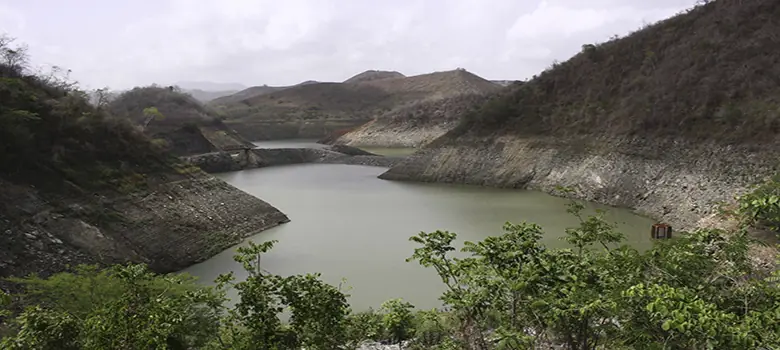
Water and Technology: A Necessity for Improving Public Services in Cities
12 February 2020 by Jonny Cabrera
Water is a natural, renewable resource essential to every human activity. Earth is 70% water — yet only a fraction of it is drinkable.
Oceans and seas account for 97% of that total. Most of the remaining 3% freshwater is locked in polar ice caps and glaciers. The water actually available for human consumption amounts to barely 1% of all the water on the planet.
When we turn on a tap, take a shower, water the garden, or pour a glass of water, we rarely stop to wonder where it comes from or whether it is safe. It is a service cities provide, and we take it for granted.
Access to clean water is a right — one that every person on earth should have. In practice, it remains out of reach for far too many.
Beyond the specific conditions of each country in the region, the water service problem is severe. Climate change is disrupting weather patterns considered normal for decades, shifting what were once predictable wet and dry cycles in dangerous ways.
Gradually, deploying technology to monitor and manage urban water distribution networks is becoming standard practice rather than the exception.
When a Leak Goes Unnoticed
Walk through almost any urban center and you are likely to see water pooling in the street — in many cases, drinking water. Response time is everything: the faster the problem is resolved, the less waste occurs and the sooner service is restored.
In Latin America, that response is often slow. Without real-time data, problems only surface once the damage is visible — and by then, a prolonged leak has already affected road infrastructure and cut water supply to entire neighborhoods.
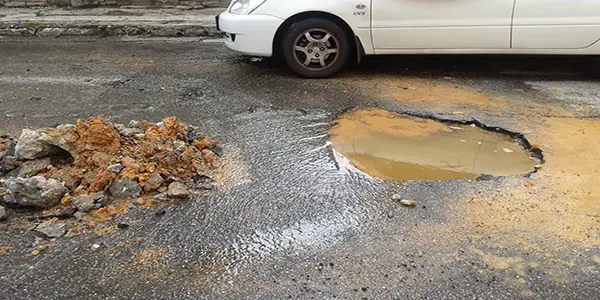 Urban water distribution pipeline network.
What a Smart Water Management System Does
A water management system continuously tracks the many variables that make up the distribution process, enabling efficient operation and maintenance.
The goal is to minimize service interruptions and ensure the water reaching the consumer's tap actually meets quality standards. That last word — quality — matters enormously. Providing access to water that is unfit for consumption is not a solution; it is a vector for bacteria and pathogens that can trigger serious public health crises.
This is precisely why governments increasingly recognize the urgency of adopting technology as a tool — not an end in itself, but a means of raising quality of life in cities.
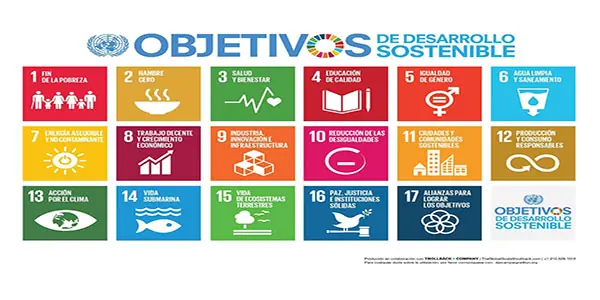
Water management and supervision systems have moved from being considered a luxury to being understood as a necessity. Improving water distribution is so critical that it anchors UN Sustainable Development Goal #6 (Clean Water and Sanitation), which measures not just whether a service exists but how good it actually is.
 Technology applied to drinking water monitoring and management.
Cities Are Living Systems
Cities are complex, dynamic, constantly evolving — and that demands continuous adaptation to technologies that can generate actionable information.
Regardless of whether a solution is driven top-down by government mandate or bottom-up by community demand, effective implementation requires public agencies, private enterprise, and citizens working together. Without coordination across those three groups, even the best-designed solution will struggle to take hold.
Technology advances at a remarkable pace. Moore's Law suggests that processing capacity roughly doubles every 18 months, and the sensor and measurement hardware available today reflects that trajectory — devices that were cost-prohibitive a decade ago are now viable at city scale.
IoT as the Enabling Layer
IoT (the Internet of Things) represents a step-change in how cities can approach infrastructure monitoring: low capital cost, high scalability, and the flexibility to grow with demand. For water as a public utility, the minimum instrumentation worth considering includes:
- Water quality measurement along the full distribution path — from source or treatment facility to the consumer's tap.
- Pipeline condition monitoring via pressure and flow sensors on trunk mains and branch lines.
- Pump station health monitoring.
- Intermediate storage tank levels.
- Supervision and control of electrovalves distributed throughout the network.
Measurement Enables Control
There is a principle worth taking seriously: what gets measured gets managed. A network of sensors, detectors, and actuators deployed across an urban water system generates the kind of data — high volume, velocity, variety, veracity, and real value — that makes big data analytics genuinely useful rather than theoretical.
With that information in hand, the right decisions can be made at the right moment. That is how we start delivering the water service that everyone deserves.
Jonny Cabrera jcabrera@innotica.net @jonjocaza