
Energy Efficiency in New Buildings
29 February 2016 by Carlos Dobobuto
Government Obligation or Private-Sector Responsibility?
New buildings must be designed for a world that demands environmental accountability. Climate change is real, measurable, and accelerating — and the damage being done to our shared home is not a matter of debate.
Responsibility doesn't rest with governments alone. Waiting for public institutions to solve a problem that every stakeholder contributes to is a losing strategy. The responsibility runs from household resource use all the way up to large commercial buildings, office towers, hotel chains, and industrial facilities.
It is frustrating to speak with construction company owners or project investors who still regard energy-efficient design as an unnecessary luxury. In most cases, they avoid the procedures, specifications, materials, and equipment that guarantee efficient resource use — because those choices can raise design costs and, by extension, construction costs.
More troubling still is watching newly completed buildings struggle to maintain basic service quality because no provisions were made for even partial energy self-sufficiency.
Venezuela is currently living through an energy crisis with several contributing causes, but the primary driver is a prolonged drought intensified by global warming. The national government has been forced into drastic measures that have sparked widespread controversy: mandatory activity suspensions due to energy shortages affect not only citizens' quality of life but also the economic output of countless organizations.
Most people blame the government — and there is some truth to that — but our own collective responsibility cannot be ignored. It is time to stop acting as energy leeches and start treating resources as the finite asset they are.
Energy Policy in New Construction
While governments cannot carry this burden alone, regulation and state-level planning play a critical role. Requirements and recommendations must be designed to raise public awareness and compel the private sector to ensure that new buildings generate at least a portion of the energy they consume — ideally without burning fossil fuels, which emit significant quantities of CO2 and accelerate the problem.
Policy must also mandate infrastructure that guarantees efficient use of energy supplied through public distribution networks.
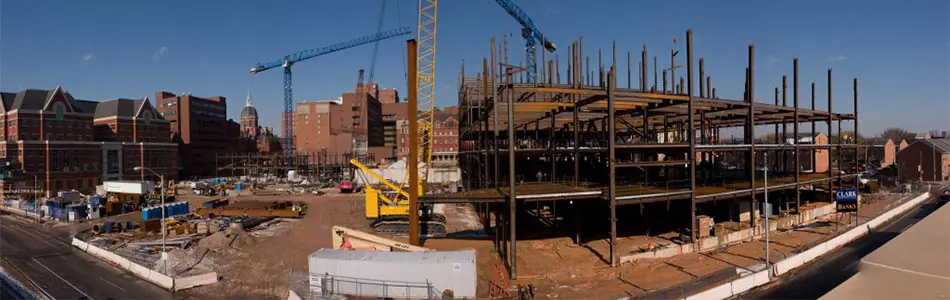
 Efficient energy infrastructure in a modern building.
Compliance requirements need to be paired with incentives that motivate developers to adopt best practices. Those incentives don't have to be subsidies — tax credits, public recognition, and reduced regulatory fees can be equally effective.
The core objective is for legislation and incentives to move in tandem, ensuring that new buildings are never 100% dependent on the public grid for their operation.
Education is equally vital. Schools, technical institutes, and universities must develop curricula that produce professionals who understand the causes and consequences of climate change — not as an abstract concern, but as a design constraint they will manage throughout their careers.
Finally, any policy framework must include continuous performance monitoring. Buildings — public and private alike — should be required to track and report their total resource consumption and how it is distributed across systems and zones. Without that data, improvement is guesswork.
First Steps
 The path to energy-efficient buildings begins with design decisions.
Every signal points to the same conclusion: new buildings need systems capable of generating enough energy to remain operational — at least for a defined period — independent of the public grid. The current national context makes that need concrete rather than theoretical.
Energy in countries with heavy state subsidies is artificially cheap. That won't last. Whether through sector-specific regulations targeting large consumers or through a substantial rise in energy tariffs, the conditions under which energy is delivered to end users will eventually adjust. Both scenarios point in the same direction: design and construction must adapt now, not later.
New projects must therefore include the engineering infrastructure needed to produce part or all of their own energy, while maintaining rational consumption management across all systems and zones. Delivering that infrastructure requires engineering design that integrates energy generation solutions with consumption control — across every subsystem and area of the building.
Adapting Our Designs and Construction Approaches
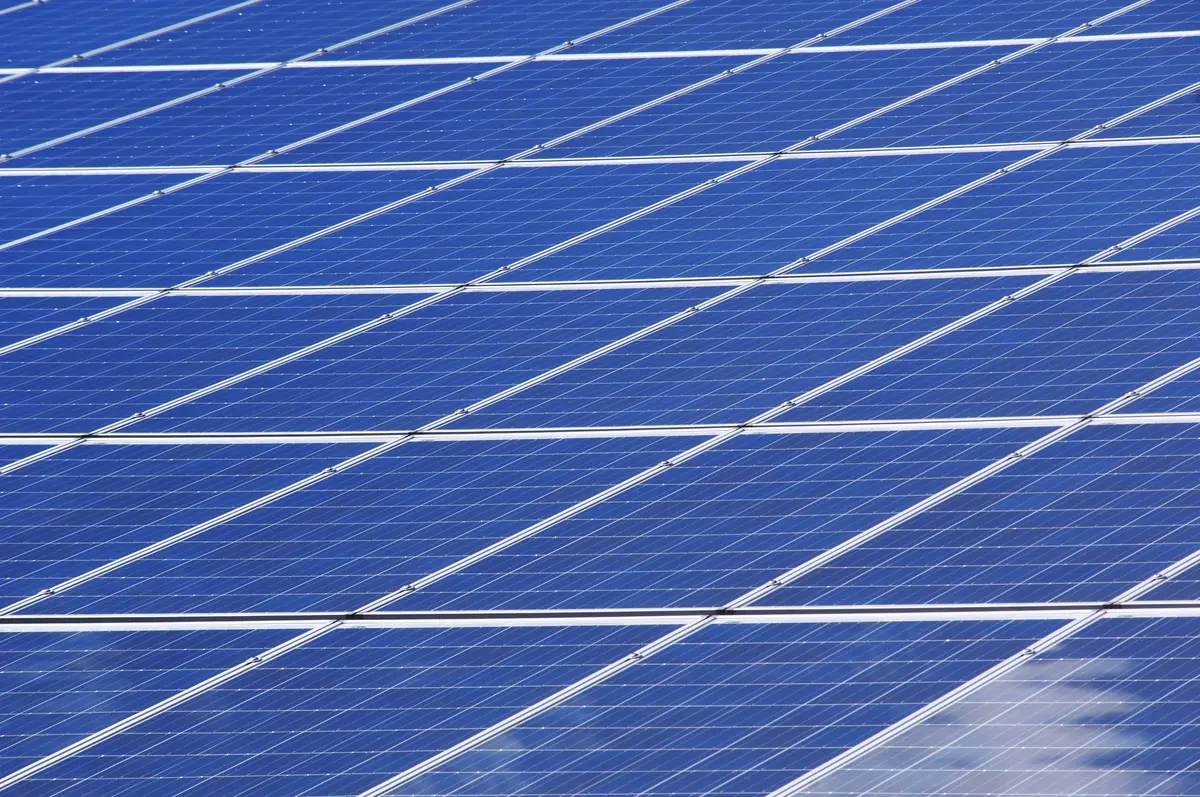 Alternative energy and consumption-control design is now a lead discipline in new construction.
Alternative energy generation combined with consumption-control networks is emerging as the lead discipline in building design. Like a conductor directing an orchestra, the engineer responsible for this system must work in coordination with every other specialist on the project — setting the technical parameters that all other disciplines must respect to achieve maximum efficiency across the facility.
For energy generation, the priority is technologies that minimize CO2 emissions. While traditional diesel generators are not recommended as primary sources, having one on standby remains useful for guaranteeing operability in specific scenarios. The design baseline should be clean energy: rooftop photovoltaic panels for direct consumption, small- and medium-scale wind turbines, and biomass boilers.
Consider a large shopping mall as an example. This type of building needs lighting and HVAC running continuously throughout the day. Rooftop solar panels can feed the interior lighting and a share of the cooling load directly. Once the sun sets, medium-power wind turbines harvest the site's wind potential to cover part of the overnight demand. Any remaining load can be drawn from the public grid, generated via biomass boilers, or — as a last resort — covered by a conventional generator. The result: grid dependence drops well below 100%, and the pressure the facility places on the national distribution system is significantly reduced.
 Integration of alternative energy sources and consumption control in a commercial building.
On the consumption-control side, the options range from straightforward to sophisticated. At the baseline level: LED lighting, efficient HVAC systems built around chillers, air handling units (AHUs), and variable-frequency drives (VFDs) on pumps and motors. These choices alone produce meaningful reductions.
At the more advanced end, building automation and control networks integrate every system across the facility into a single managed environment. These building management systems (BMS) — sometimes called inmótica in Spanish-language practice, referring to automation technologies oriented toward commercial and tertiary buildings — allow operators to configure control strategies, monitor consumption in real time, and evaluate building behavior continuously.
Combining energy generation with consumption control, and layering in the architectural decisions that amplify both — building orientation, envelope materials, free cooling systems, daylighting strategies, and even landscaping — makes it possible to achieve genuine efficiency in resource use and to extract full value from the costly equipment that keeps a building operational.
The Road Ahead
Sustainable construction is the path toward an energy-responsible future.
Global warming is not a concern exclusive to wealthy nations. We cannot turn our backs on the planet we share. Meeting international agreements on CO2 reduction is not optional — it is a direction we must move toward, progressively and deliberately.
There is no defensible excuse for constructing a luxury corporate tower, a large shopping center, a five-star hotel, or a high-end residential development without incorporating efficient resource use and on-site energy generation. The time for complaints is over. Each of us — developers, engineers, investors, and public officials — can contribute something to building the kind of country and world we say we want.
"Lead by example" applies as much to public institutions, which waste energy constantly across our cities, as it does to large private developers who have grown accustomed to relying entirely on the state to power their profitable facilities.