
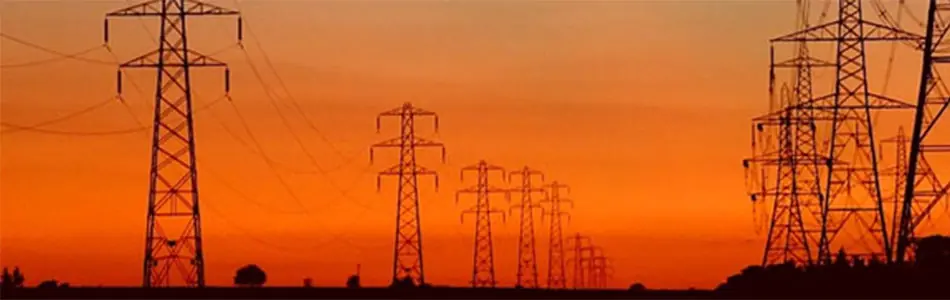
Optimizing Electricity Consumption in Cities
22 February 2016 by Jonny Cabrera
Street Lighting and Large Energy Consumers
Latin America is currently taking the full force of El Niño: some countries are locked in severe drought while others are drowning in torrential rain.
Climate change sharpens the effects of this cyclical phenomenon across every dimension of national life — energy supply chief among them.
Energy is one of the fundamental engines of a country's development. It underpins virtually every productive and recreational activity a society depends on for its daily functioning.
Growth in generation capacity, public awareness of consumption, and maintenance must all advance together. Only then can a country guarantee uninterrupted service and minimize the damage from natural events like El Niño.
Drought and Its Consequences
 Extreme drought puts Venezuela's hydroelectric generation under severe strain.
Venezuela relies on hydroelectric plants for more than 60% of its electricity — which is why extended dry periods set off immediate alarms about generation capacity.
Attempts to diversify the sector through thermal plants alongside hydroelectric dams have not meaningfully reduced the exposure. Worse, the country has failed to develop renewable energy sources — particularly solar photovoltaic and medium-to-high-capacity wind — at any meaningful scale.
Faced with a grim outlook for the year ahead, authorities have begun imposing emergency demand-reduction measures to ward off rolling blackouts. These include shortening public-building operating hours, restricting shopping-center schedules, and applying consumption caps to both the general public and large industrial users.
These are stopgap measures. None of them address the underlying question: how do you actually optimize electricity use?
Confronting the National Reality
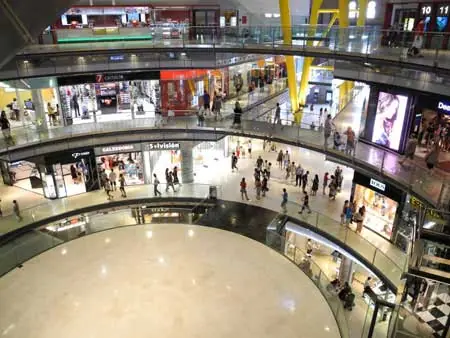 Cities account for the largest share of national electricity consumption.
Population growth drives a sustained 3–5% annual increase in electricity demand, so generation infrastructure must be planned and built ahead of that curve.
The heaviest consumers in the country are not individual households — they are large buildings (public and private) and the public street-lighting network.
For large buildings, the answer lies in regulation: require all new construction nationwide to generate, through renewable or conventional on-site sources, at least 30% of its own energy consumption. Changes of that scale demand strong political will; they are not simple, but they are necessary.
Street lighting is an equally critical target. There is no shortage of proven international models to draw from.
Saving energy is not simply a matter of swapping out thousands of fixtures for LED units across the country. Without a management infrastructure that provides real-time visibility into the state of each luminaire, that capital investment will eventually be lost to undetected failures, vandalism, and theft — benefiting procurement budgets far more than the grid.
Continuing to buy and replace without building intelligence into the network is, frankly, a good business for some suppliers. What is being left on the table is the opportunity to give our public lighting infrastructure a voice.
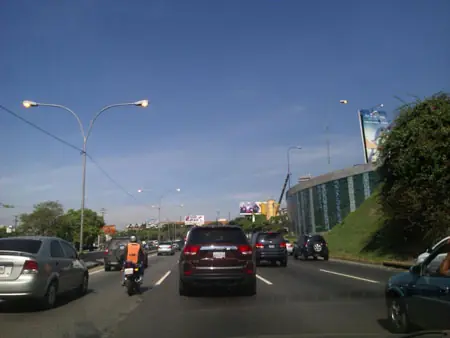 A supervision and control system can unlock energy savings of up to 45% across the street-lighting network.
Deploying a supervision and control system across the public lighting network can cut energy consumption by up to 45% through time-of-day dimming schedules.
A practical profile might look like this: from 6 p.m. to 11 p.m., luminaires run at 80–85% (the human eye cannot meaningfully distinguish 80% from 100% output). From midnight to 4:30 a.m., when both vehicle and pedestrian traffic drop sharply, they dim to 50–60%. Streets stay lit — no pitch-black stretches — and the sense of safety is preserved. From 4:30 to 6 a.m., intensity rises back to 80–85% to accompany early commuters.
That is the profile for a single luminaire. Scaled to the full national network — over 1.7 million fixtures, according to CORPOELEC's last published electrical yearbook — a nationwide management system of this type could release approximately 0.5 GWh back into the national grid: equivalent to the entire annual electricity consumption of Anzoátegui state in 2013.
The numbers are significant, but the benefits go further. These systems detect unauthorized connections — electricity theft — at the exact point of occurrence. They flag vandalism such as cable theft and damage to fixtures and control panels, enabling security forces to act on precise, real-time intelligence rather than after-the-fact reports.
Paternalistic State or Efficient State
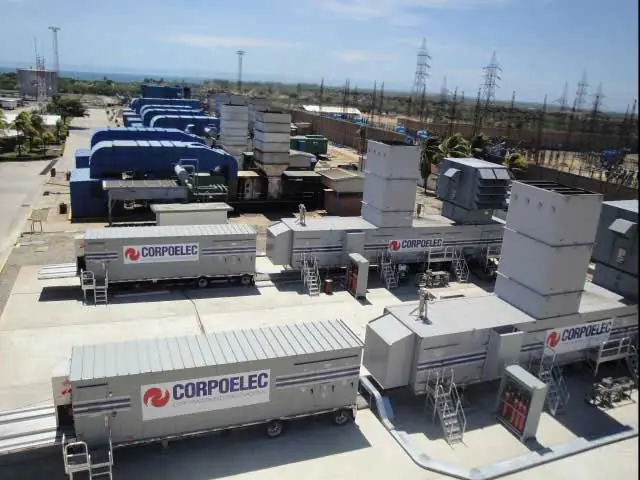 Investing in intelligent lighting management costs a fraction of building equivalent generation capacity.
The investment required is small relative to the cost of adding one megawatt of generation capacity. Critically, deploying these management networks leverages the existing street-lighting infrastructure — cabling, poles, and luminaires — with the only additional hardware requirement being an electronic ballast at each point.
In macro terms, the cost ratio between adding 500 MW of generation capacity and deploying a national street-lighting management system is roughly 5 to 3. Although end-user electricity tariffs in Venezuela are very low, the state bears the full production, transmission, and maintenance costs — which are substantial.
The benefits would be tangible to citizens within three to four years — a timeframe that is, incidentally, quite relevant to the electoral calculations of those in office.
Contributing or Criticizing?
Some may assume these ideas are only feasible elsewhere, or that local talent is not available to execute them. That assumption is wrong. Venezuela has professionals with hands-on experience in exactly this domain — including the implementation of a street-lighting management system in Ecuador, the first Latin American country to deploy this type of technology.
If both measures were implemented together — a self-generation mandate for new buildings and intelligent management of the public lighting network — the country would have far less need for painful rationing cycles. Productivity in both the public and private sectors would be protected, and citizens' quality of life would improve.
The tools, the knowledge, and the experience already exist in this country and across the region. What is needed is the collective will to make the decisions and take the actions that guarantee genuinely efficient use of every resource we have.
We invite both policymakers and business leaders to play their part in improving quality of life for everyone and reducing the footprint we are leaving on the planet. This is a direction that will become the norm in the near future — but the shift cannot wait for tomorrow, because tomorrow may be too late: the change must start today.