
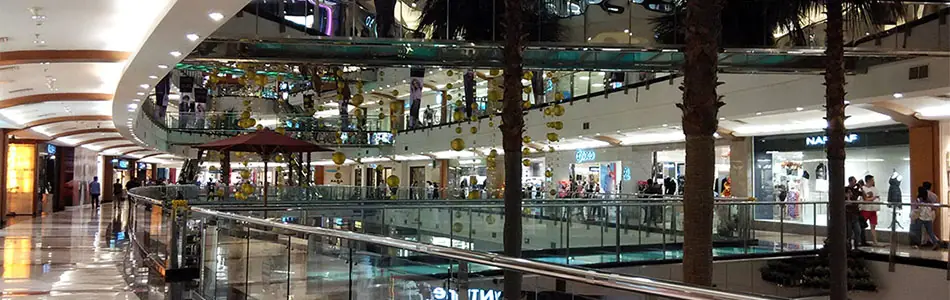
Energy Optimization for Large-Scale Consumers
14 March 2016 by Carlos Dobobuto
Principles and Business Models
Energy optimization means ensuring that energy resources are used appropriately — delivering the same quality of service while consuming less than before.
A straightforward way to picture this: imagine cutting your monthly household energy bill without changing any of your routines or comfort standards. Manufacturers across every sector have been chasing that goal for decades, from household appliances to large industrial motors and machines, all competing to lead the market on efficiency.
Globally, energy is a high-value commodity whose costs weigh on household, corporate, and government budgets alike. In Venezuela, end-user energy prices rank among the lowest in the world; yet pressure is mounting — increasingly hard to ignore — for large-scale consumers to reduce their energy footprint at a national level.
Governments have responded with a range of measures: consumption-band penalties for facilities that exceed set thresholds, and in more extreme cases, mandatory supply rationing.
The solutions available are equally varied — from changing how spaces are used to replacing existing materials within structures. Service companies today offer a wide range of approaches; the majority focus on reducing energy consumption in specific subsystems such as lighting, HVAC, or alternative energy supply.
Other companies pursue integrated solutions that combine consumption-control networks, device replacement, alternative energy generation, and architectural retrofits. These approaches have opened new business opportunities built on advanced technology — and continuous professional training is essential to making them work.
Point Optimization
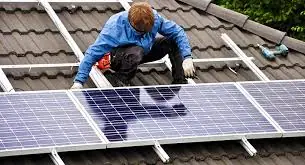 Targeted interventions on lighting and HVAC subsystems in commercial facilities.
Many energy-efficiency service providers for large consumers limit their scope to two actions: supplying alternative energy generation systems — such as solar panels — and replacing specific components, such as swapping traditional luminaires for LED fixtures or upgrading inefficient HVAC units to high-efficiency models.
These solutions genuinely reduce energy consumption and make it easy to calculate ROI, giving facility owners the data they need to decide whether a given measure is worth implementing.
What they leave on the table, however, is the broader potential to monitor energy consumption across the entire facility, evaluate the behavior of each subsystem, and reconfigure control strategies as conditions change.
Comprehensive automation and control networks do more than manage how energy flows through a facility — they also provide a powerful data-management platform for every monitored area.
Integrated Optimization
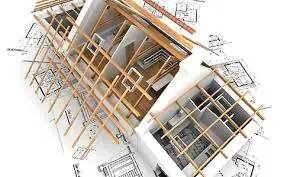 An integrated approach evaluates the current state of a facility across four key areas.
Integrated energy optimization begins with a thorough assessment of the facility's current state, leading to recommendations across four areas:
- Automation and control networks: Control and integration networks that manage every element within a facility, enabling efficient energy use across all areas, and providing a powerful supervisory and control platform.
- Device replacement: Substituting existing equipment is an important lever — especially in facilities where lighting is the dominant load. Particular attention is required when replacing HVAC systems and large ventilation or pumping equipment, since their higher costs can significantly extend the payback period.
- Alternative energy supply: Falling solar panel costs make on-site generation an increasingly attractive option. The practical recommendation is direct-consumption solar — powering loads during daylight hours without expensive battery storage. In most commercial buildings, for example, interior lighting can be fed from solar panels, reducing grid dependence during daytime hours.
- Architectural retrofits: These measures require careful evaluation. Some deliver substantial benefits; others carry costs and disruption high enough to make them impractical. Options range from low-cost interventions — skylights or translucent domes to harvest natural daylight — to major investments such as installing a thermal building envelope to improve the energy performance of occupied spaces.
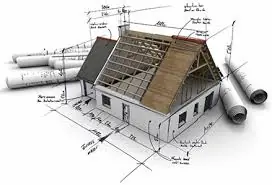 Direct-consumption solar systems eliminate battery costs and reduce dependence on the public grid.
When applied comprehensively, these measures can drive energy savings of up to 60%. That potential has attracted investors and large service companies to develop business models where every stakeholder benefits — with the planet as the biggest winner.
Emerging Business Models
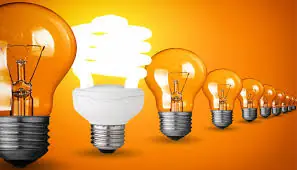 Emerging models align the investor's incentives with those of the energy-intensive facility owner.
High consumption levels, rising energy costs, and proven optimization methods have combined to spark a new generation of business models. One of the most common works like this: a service company or investor approaches a large consumer and proposes that the client pay only 80% of its current electricity bill, in exchange for signing a maintenance contract of at least four years.
The service company then optimizes energy consumption to the maximum extent the facility allows, funding all necessary investment. The target is to achieve at least the saving promised to the client — in this example, a minimum 30% reduction in consumption — ensuring the investment is recovered before the contract expires. The investor's return comes from the spread between the promised savings percentage and the savings actually achieved.
The key variables in this model are: the savings percentage committed to the client, the contract term, the actual energy savings delivered, and the implementation cost of the chosen solutions. The wider the gap between achieved savings and promised savings, and the lower the capital outlay, the greater the return.
These contracts must also include exit provisions that allow the facility owner to terminate the agreement when needed, without penalizing the investor who has already funded the upgrades.
Workforce Training
 Continuous training is essential to unlocking the full potential of energy optimization solutions.
Looking across all the solutions and business opportunities described here, one need stands out clearly: the professionals who implement these systems must keep learning. A well-known observation captures this perfectly:
"If you think training is expensive, try incompetence."