
Integrated Automation and Control Networks: A Must-Have for Every Construction Project
29 June 2017 by Carlos Dobobuto
When a developer or contractor begins planning a new build—or a significant retrofit of an existing facility—certain design disciplines are commissioned almost automatically: architecture, electrical, plumbing (domestic water supply, wastewater, and in some cases greywater), fire protection, HVAC, telecommunications (voice and data), and electronic security (CCTV and access control).
What almost never makes that list is the integrated management network that ties all of those subsystems together. Because it isn't strictly required to erect the structure, project directors tend to overlook the gaps in control and integration definitions—right up until those gaps become expensive problems.
The real reckoning comes either during equipment installation or, worse, once the building is already in operation.
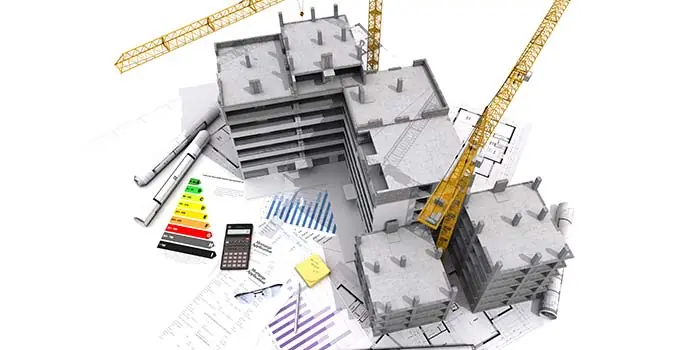 Automation and control infrastructure integrated during the construction phase.
What Goes Wrong Without an Integrated Network
Developers and contractors who build without a management network in scope will typically encounter some or all of the following:
- Ad hoc subsystem management — control responsibility falls to security guards or old-fashioned analog timers.
- Reactive procurement — instrumentation and platforms get purchased in a rush from each specialty contractor's preferred vendor, eliminating any negotiating leverage.
- Degraded service quality — when regulatory bodies impose energy-consumption limits, there is no coordinated mechanism to respond without impacting occupants.
- Manual equipment monitoring — operators must physically check the status of costly installed equipment with no centralized visibility.
- Wasted capital — platforms get purchased that duplicate functionality or simply aren't needed.
- Siloed management platforms — multiple systems with no communication between them.
- Oversized operations staff — continuous supervision of critical equipment requires multiple technicians, often under rigid shift schedules.
- Vendor lock-in — exclusive maintenance contracts with a single equipment supplier, with no easy exit.
- Human-error-driven outages — mistakes in manual predictive maintenance routines interrupt services.
- Emergency corrective maintenance — unplanned failures that could have been anticipated through proper monitoring become costly emergency callouts.
Designing the Network Before the First Shovel Hits the Ground
Avoiding these outcomes means commissioning the integrated automation and control network design alongside the other core disciplines—not as an afterthought. A project engineer on the construction team, or an external specialist brought in for this purpose, should assess the project's actual operational requirements and conduct a systematic review of every committed design and piece of equipment across all specialties.
From that review, the team can right-size the automation functionality for the building, with open technologies as the guiding criterion—both at the subsystem level and at the integration layer.
That last point is not a minor detail. Specifying open technologies means the owner retains the freedom to choose the vendor that delivers the best value, and it allows the network to start as a lean, basic installation and scale incrementally as budget and operational needs evolve.
 A centralized platform for monitoring and controlling a building's subsystems.
The Conduit Analogy: Lay the Pipes While the Walls Are Open
Planning a construction project today without including an automation and control network is the equivalent of finishing the walls without running conduit. Once the walls are closed, adding it becomes a major intervention. Installing the pathways during construction—whether the automation layer is activated immediately or phased in later—costs a fraction of what a retrofit will require, and it future-proofs the asset in ways that increasingly matter to tenants, operators, and regulators alike.
The question worth asking at the design table isn't whether automation belongs in the project. It's how much it will cost to add it later if you leave it out now.