
Project Management: Traditional Methodologies and Agile Frameworks
29 July 2020 by Lisgrett Bellorin
Throughout our professional careers, we have all faced the challenge of creating and delivering projects. Whether small, medium, or large in scale, every project has defined objectives — always aimed at meeting a need within environments defined by volatility, uncertainty, complexity, and ambiguity.
These conditions push organizations to respond quickly to change, stay results-oriented, encourage collaborative teamwork, and sustain continuous innovation across every project they undertake.
To do that, teams rely on different tools and approaches: traditional methodologies, agile frameworks, or hybrid combinations — whichever best fits the project at hand.
What Is a Methodology? What Is a Framework?
A methodology is a defined set of practices to be followed according to an established guide or roadmap. It creates compliance standards — often quite strict — that ensure effectiveness and can be audited straightforwardly.
A framework, by contrast, is a set of practical recommendations developed by domain experts that deliberately leaves room for adaptation. The goal is the same — effectiveness and fulfillment of project objectives — but the path is more flexible.
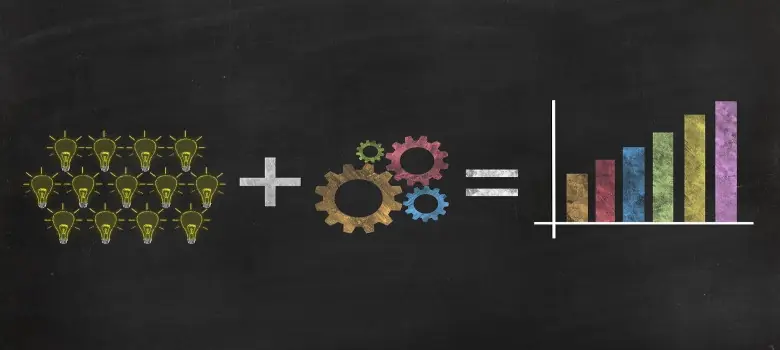
 An overview of project management using both traditional and agile approaches.
With those definitions in mind, a useful question to ask yourself is: which approach have you actually used in the projects you've been part of?
A project run sequentially — where each phase had to be completed and documented before the next could begin — followed a traditional methodology. One where the team embraced continuous improvement through iterations, surfacing changes and improvements well before final delivery and keeping all stakeholders informed along the way, would be running an agile framework.
When to Use Each Approach
Context is everything. An organization whose project management experience is rooted in traditional methodologies may meet real resistance when introducing an agile framework. Agile implies an organizational transformation: it demands a culture of continuous innovation and genuine team self-management, which isn't built overnight.
That said, it's worth noting that PMI® (Project Management Institute) — one of the leading authorities on traditional methodologies and the body behind the PMBOK® Guide — has actively incorporated agility as a complement to project delivery in recent editions.
 Agility is increasingly incorporated as a complement to traditional project management.
What Is Agility?
Agility is the ability to create and respond to change in order to succeed in a turbulent business environment.
Agility is a quality — and like any quality, it should be treated as a goal worth pursuing. Reaching it is only half the work; maintaining it requires an ongoing commitment.
An agile organization stays open to new ideas, actively creates space for continuous innovation, and keeps a sharp focus on understanding and meeting customer needs. Customer satisfaction isn't a by-product; it's the focal point.
Can Agility Apply Beyond Software?
Personally, I didn't always realize that agile methodologies could apply to fields outside software development. They were originally conceived for that domain, but today they reach far broader — including fields like advertising and marketing.
The short answer is yes. Agility goes well beyond software: it's a mindset, a culture, a willingness to step outside traditional patterns without abandoning them entirely. Finding the right balance between both worlds may be one of the defining characteristics of tomorrow's professionals — or rather, of today's.
In a world of constant change where no outcome is guaranteed, standing still is not a viable strategy. For me personally, agility offered exactly that: the capacity for adaptation, inspection, and transparency.
"Always moving forward. Not because there are people behind us, but because there are already so many ahead." — Credit to whoever said it first.
Lisgrett Bellorin lbellorin@innotica.net LinkedIn
References
- Free webinar series by IT Service: "Principles of Project Delivery" (instructor: Edgar Rojas); "Differences Between Agile – Agileism – Agility" (instructor: Pablo Andrés Loyola); "SCRUM: Framework or Methodology" (instructor: Ricardo Nieto); "Agile in a VUCA World" (instructor: Ricardo Nieto); "Agile Glossary" (instructor: Pablo Andrés Loyola).
- The Scrum Map — free guide
- YouTube video