
Social Media: Every Entrepreneur's Best Ally
5 August 2020 by Marielena González
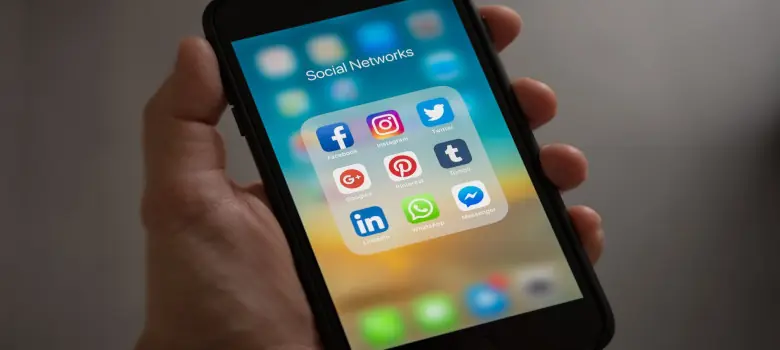
Social media has grown at a remarkable pace since it first emerged over a decade ago. Its global influence is here to stay — though how people use these platforms, and what they expect from them, varies widely by country.
Research by Tendencias Digitales [1] found that 42% of Venezuelan internet users are active on social media. Within that population, approximately 11 million are active on Facebook, 4.2 million on Instagram, and 1.29 million on Twitter — sharing ideas and experiences through text, audio, photos, and video.
The pull of these platforms is significant: according to a GlobalWebIndex report cited by Digital Information World, people spend an average of 142 minutes per day on social media. What they do with that time, however, depends entirely on who they are and what they're after.
The 3 Most Common Uses of Social Media
- As an information channel: Many users turn to social media before a search engine when looking for content that interests them.
- As a two-way communication channel: Users can engage directly with whoever posted a message — and vice versa — sustaining real dialogue rather than one-way broadcasting.
- For digital marketing: Businesses use social platforms to promote products and services and build brand recognition with potential customers. Compared to traditional media, social advertising is far more affordable and enables a much more direct relationship with the audience.
Social media marketing has become a critical channel for e-commerce worldwide. Companies of all sizes use it to buy ad space and deploy content marketing strategies.
Facebook and Instagram are the two largest platforms, and they manage an enormous volume of user data — collected through the time people spend on them. That data includes location, gender, age, interests, and behavioral patterns. For businesses running paid campaigns, this targeting capability translates directly into more effective ad spend.
 Social media gives entrepreneurs a segmented, low-cost advertising channel.
3 First Steps Toward Effective Social Media Advertising
- Avoid the "Boost Post" button: Anyone managing a business profile has seen it. The advice is to skip it — especially early on. Boosted posts target people with characteristics similar to your current followers, who at first are usually friends and family. That audience is unlikely to become customers, so the budget goes to waste.
- Define your ideal follower precisely: Your ideal follower is your ideal customer. Think about who is genuinely interested in what you offer. If you've already had customers, map the common characteristics of those profiles.
- Create content for that specific person: When your messaging speaks to one clearly defined audience, both organic and paid content reaches users who are far more likely to convert.
Social media platforms are, at their core, spaces where millions of people express themselves and connect — organized around shared interests and relationships. Those interactions can be channeled toward positive or negative ends.
Advantages of Social Media
- Users can stay connected from anywhere in the world and reach family or friends at any time.
- Instant messaging is available around the clock, making it easy to form groups around shared interests.
- Platforms serve as an accessible source of information on almost any topic.
- For entrepreneurs and businesses, they provide a direct channel to promote products and services.
Disadvantages of Social Media
- Sharing personal content exposes users to privacy risks — content can be repurposed by bad actors for unintended purposes.
- For some users, the platforms can become addictive, leading to social withdrawal.
- Hate speech and divisive content spread easily, with real consequences for communities.
A prominent example unfolded in July 2020: in response to events in the United States, major organizations launched the "Stop Hate for Profit" campaign, pausing paid advertising on platforms including Facebook to pressure the company into making meaningful changes to its policies on hate speech and abusive content.
 The "Stop Hate for Profit" campaign demonstrated the collective pressure that advertisers can bring to bear on major platforms.
Data Is Power
Hobbes observed that whoever holds information holds power. That framing is worth keeping in mind when thinking about Facebook — the parent company of Facebook, Instagram, and WhatsApp.
The scale of data Facebook manages has turned it into an organization generating billions of dollars annually from advertising and content marketing alone. There is speculation that WhatsApp will eventually carry paid advertising as well.
How that data gets used depends on what individuals and organizations want to achieve with a given user segment — and the platform's influence over those segments is substantial. There is little doubt that social media offers an exceptionally cost-effective channel for reaching defined audiences.
Every entrepreneur should treat social media as a serious tool for building visibility and turning followers into potential customers. But it's worth remembering what these platforms are built on: social relationships. Content needs to add genuine value and connect with the audience on a human level — showing that behind the brand, there are real people doing their best to deliver something worth their time.
Marielena González mgozalez@innotica.net LinkedIn
References
- Tendencias Digitales (2018)
- Advantages of Social Media